


Remembering Robert Mueller: A Life of Service, Integrity, and Unwavering Dedication
A Distinguished Leader Passes Away
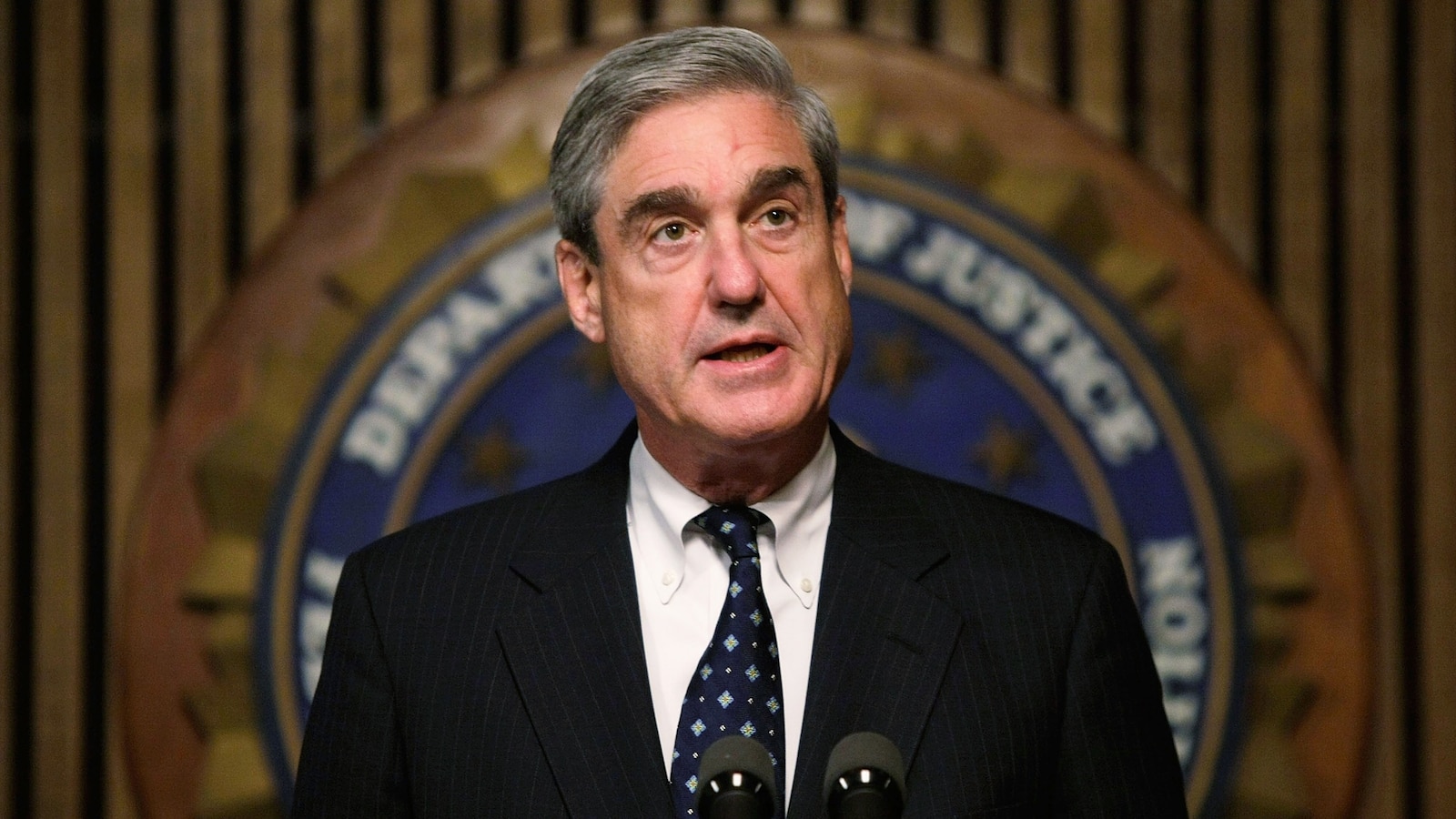
The nation mourns the loss of Robert Mueller, a towering figure in American law enforcement and justice, who passed away at the age of 81. His family announced the sad news with a simple yet profound statement expressing their grief and requesting privacy during this difficult time. Mueller’s death marks the end of an era for those who witnessed his steady hand guiding the FBI through some of the most challenging periods in modern American history. The FBI Agents Association paid tribute to their former director, acknowledging his pivotal role in transforming the bureau to meet evolving national security threats while preserving its fundamental mission of criminal investigation. WilmerHale, the prestigious law firm where Mueller served as a partner after his government service, remembered him as an extraordinary leader whose integrity was unmatched and whose dedication to public service served as an inspiration to colleagues and citizens alike.
From Princeton to Vietnam: The Making of a Leader
Robert Swan Mueller III came into the world on August 7, 1944, in New York City, born into circumstances that would shape a life dedicated to service and country. His academic journey began at Princeton University, where he immersed himself in the study of politics, developing the analytical framework that would serve him throughout his career. Following his undergraduate studies, Mueller pursued a master’s degree in international relations at New York University, broadening his understanding of global affairs and diplomacy. However, it was a profoundly personal tragedy—the death of a college classmate in the Vietnam War—that would redirect the course of his life in a fundamental way. This loss stirred something deep within Mueller, compelling him to answer a call to service that many of his generation struggled with during that divisive period in American history.
In 1968, Mueller made the momentous decision to enlist in the United States Marine Corps, embracing the danger and uncertainty that awaited him in Vietnam. His two years of service as a platoon leader in that brutal conflict tested him in ways that few experiences could, forging a character of resilience, courage, and selflessness. The recognition he received—including the Purple Heart, Bronze Star, and two Commendation Medals—testified not merely to his bravery under fire but to his exceptional leadership in protecting and inspiring the men under his command. When he left the Marines in 1970 with the rank of captain, Mueller carried with him lessons about duty, sacrifice, and leadership that would inform every position he held throughout his remarkable career in public service.
Building a Career in Justice and Law Enforcement
After hanging up his military uniform, Mueller redirected his formidable intellect and discipline toward the law, enrolling at the University of Virginia Law School and graduating in 1973. What followed was an impressive 28-year journey through various positions as a U.S. attorney in San Francisco, Boston, and Washington, D.C., along with three critical years at the Department of Justice Criminal Division. During this extensive period in federal prosecution, Mueller built a reputation as a tenacious, thorough, and principled attorney who pursued justice without regard to political considerations or personal advancement. His work investigating the notorious Gambino crime family demonstrated his willingness to take on powerful, dangerous adversaries in the service of law and order.
Perhaps among his most significant prosecutorial achievements was his role in bringing to justice those responsible for the bombing of Pan Am Flight 103 over Lockerbie, Scotland, in December 1988—a terrorist attack that killed 270 innocent people and shocked the world. Mueller’s meticulous approach to building the case reflected his characteristic attention to detail and determination to hold perpetrators accountable regardless of how long it took or how complex the investigation became. Additionally, his prosecution of former Panamanian military dictator Manuel Noriega showcased his ability to navigate the complicated intersection of international relations, military operations, and criminal justice. These high-profile cases established Mueller as one of the nation’s most capable and trustworthy prosecutors, setting the stage for his appointment to the highest levels of law enforcement leadership.
Leading the FBI Through Crisis and Transformation
On July 5, 2001, just days before the world would change forever, President George W. Bush appointed Mueller as the director of the FBI. Neither Bush nor Mueller could have anticipated that within weeks of taking office, Mueller would be tasked with leading the bureau through its most dramatic transformation in history. The September 11 terrorist attacks fundamentally altered the FBI’s mission, requiring a rapid pivot from its traditional focus on domestic crime to an urgent emphasis on preventing foreign terrorist attacks on American soil. Mueller rose to this challenge with characteristic determination, reshaping the bureau’s priorities, capabilities, and culture to meet the threats of a new era. His no-nonsense management style earned him respect among FBI agents, who appreciated his clarity of purpose and his refusal to let political considerations interfere with the bureau’s mission.
Mueller’s decade-plus tenure as FBI director—he served his full ten-year term and then, at President Barack Obama’s request, stayed on for an additional two years—made him the second-longest serving director in the agency’s history. This extended leadership provided the stability and continuity the bureau desperately needed as it navigated the complexities of counterterrorism, cybersecurity, and traditional law enforcement in an increasingly interconnected and dangerous world. When Mueller finally stepped down in 2013 to return to private legal practice, he left behind an FBI that was fundamentally different from the one he had inherited, better equipped to protect Americans from the diverse and evolving threats they faced.
The Special Counsel Investigation and Its Aftermath
Mueller’s return to private life proved temporary when, in May 2017, Deputy Attorney General Rod Rosenstein appointed him as special counsel to investigate Russian interference in the 2016 presidential election. This assignment thrust Mueller back into the national spotlight, this time overseeing perhaps the most politically charged investigation in modern American history. The probe focused on possible coordination between Russia and Donald Trump’s presidential campaign, returning numerous high-profile indictments including those of political consultant Roger Stone, former Trump campaign chairman Paul Manafort, and thirty-two others. Mueller conducted the investigation with the same methodical, tight-lipped approach that had characterized his entire career, refusing to be drawn into public debates or political theater even as speculation and controversy swirled around his work.
When Mueller finally submitted his report in March 2019, it did not establish that the Trump campaign had conspired or coordinated with the Russian government to influence the election outcome, though it documented numerous contacts between campaign officials and Russians and detailed extensive Russian efforts to interfere in the election. Two months later, Mueller made a rare public statement announcing his resignation and return to private life, maintaining the understated demeanor that had defined his public service. President Trump’s reaction to news of Mueller’s death—posting on social media that he was “glad he’s dead” because Mueller could “no longer hurt innocent people”—sparked immediate controversy and pushback, including from Senator Mark Warner of Virginia, who, while noting he hadn’t always agreed with Mueller, joined many Americans in mourning the passing of a man dedicated to the rule of law.
A Legacy of Integrity and Service
Perhaps the most fitting summary of Mueller’s philosophy came in his own words, delivered to graduates of Tabor Academy in Marion, Massachusetts, in 2017. Speaking to young people about to embark on their own journeys, Mueller stressed the paramount importance of “integrity, patience and humility.” He told them that regardless of their chosen careers, they would be only as good as their word, and that honesty was non-negotiable because once a good reputation is lost, it can never truly be regained. These weren’t merely platitudes from a commencement speaker but principles that Mueller had lived throughout his eight decades, from the jungles of Vietnam to the halls of the FBI and the Department of Justice.
Mueller leaves behind his wife of nearly sixty years, Ann Cabell Standish, a partnership that provided the foundation for his demanding career in public service. He is also survived by two daughters and five grandchildren who will carry forward the memory of a man who embodied the best qualities of citizenship and leadership. As the nation reflects on Mueller’s life and legacy, what emerges is a portrait of someone who consistently placed duty above self-interest, who approached every challenge with thoroughness and integrity, and who demonstrated that public service, properly conducted, remains one of the noblest callings in American life. In an era often characterized by cynicism about government and public institutions, Robert Mueller’s life stands as a reminder that individuals of character, competence, and courage can still make an enduring difference in protecting and serving their fellow citizens.