


A Battle Over Truth: The Fight to Preserve America’s Complex History in National Parks
The Unexpected Conflict in America’s Sacred Spaces
In the serene embrace of Muir Woods, where towering 500-year-old redwoods stretch toward the sky just north of San Francisco, an unexpected controversy has taken root. These 500+ acres of ancient forest, long a sanctuary for reflection and natural wonder, have become an unlikely battleground in a larger cultural war about how America tells its own story. Retired U.S. Park Ranger Lucy Scott, a woman not easily rattled after years of service, found herself deeply troubled by an executive order from President Trump titled “Restoring Truth and Sanity to American History.” The directive called for the removal of signs at national parks deemed to promote “divisive narratives” and “corrosive ideology.” Among the casualties was a sign Scott herself had created, one that simply explained a scientific reality: climate change threatens the ancient redwoods by reducing the coastal fog these magnificent trees depend on for water. For nearly a decade, that sign stood peacefully, educating visitors about the delicate balance between these forest giants and their environment. Then, without warning, it was torn down. Standing at the spot where her sign once hung, Scott pointed to the remaining marks on the post—silent witnesses to what had been erased. “We’re gonna continue to fight climate change and protect the redwood forests the best that we can,” she declared, her determination evident despite her disappointment in what she called an embarrassing moment for the National Park Service.
Erasing Women and Indigenous Voices
The removal of climate information was just the beginning of what would become a systematic review of educational materials across America’s national park system. Another sign at Muir Woods fell victim to a Department of the Interior directive to eliminate exhibits that “inappropriately disparage Americans past or living.” But the content of this sign wasn’t disparaging anyone—it was simply filling in gaps in the historical narrative. The original signage had told a narrow story of the park’s development, focusing primarily on the wealthy donors who had preserved the land. The updated version had added something crucial: the contributions of women and the presence of Native Americans who had lived on and stewarded this land long before it became a park. These weren’t fabrications or ideological insertions; they were historical facts that provided a more complete picture of the park’s story. Yet according to Scott, “The administration told us to remove the added stories. They erased that women helped, they erased that there were Native Americans here for the longest time. They were erased.” The irony was stark—an order claiming to restore “truth” was actually removing factual information simply because it complicated a simpler narrative. For Scott and many others who dedicate their lives to preserving and interpreting America’s natural and cultural heritage, this felt like a betrayal of the educational mission that has long defined the National Park Service.
Confronting Uncomfortable Truths in Philadelphia
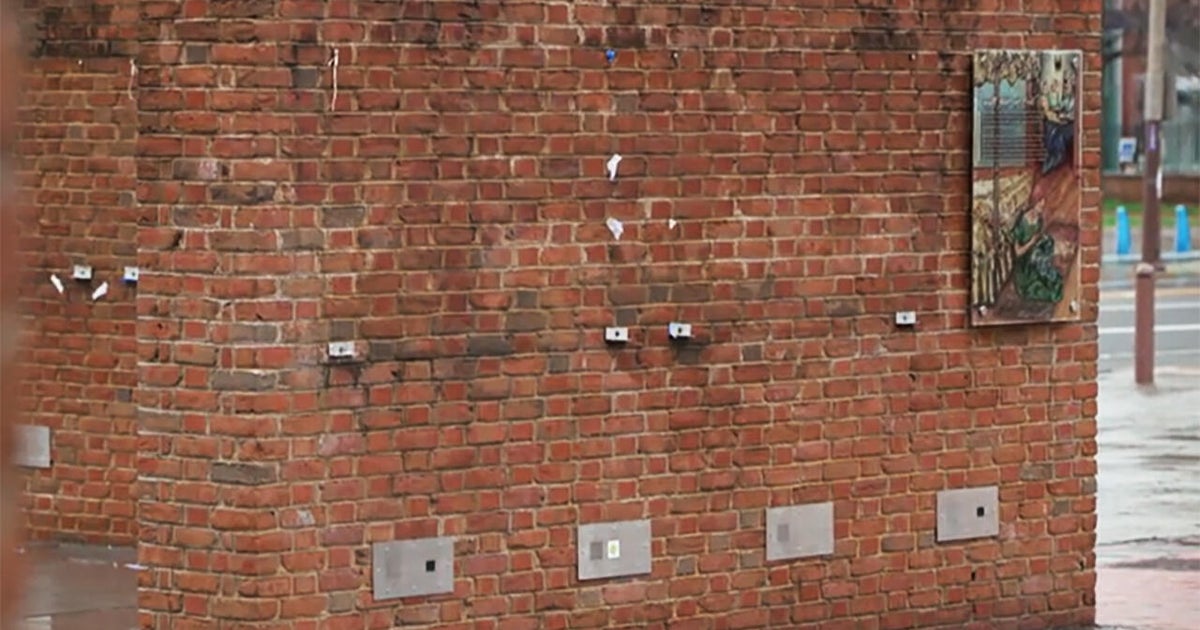
If the situation at Muir Woods stirred dismay, the removals at Independence National Historical Park in Philadelphia sparked outright disgust. Alan Spears, a historian with the National Parks Conservation Association, stood in the heart of where American democracy was born, pointing to empty spaces where educational panels once hung. These weren’t random exhibits—they told the story of nine enslaved African Americans that George Washington, the Father of Our Country, brought with him to Philadelphia when he served as president in the 1790s. The exhibit had stood for 15 years, carefully researched and thoughtfully presented, acknowledging the complex reality that the man who fought for freedom also owned human beings as property. “George Washington was here. He did good work here,” Spears explained. “He also thought about how he could protect his property here, and that property included nine enslaved Africans.” This wasn’t an attempt to tear down Washington’s legacy or diminish his achievements—it was an acknowledgment of historical reality. Washington himself devoted considerable mental energy to figuring out how to keep his enslaved workers in bondage while living in a state that had begun abolishing slavery. The panels described this tension, this very human contradiction that speaks volumes about the founding era. “This is a representation of the complex, nuanced nature of our history,” Spears said, standing where the signs once educated visitors, “and that’s too much for some people to bear. They want a straightforward narrative that’s uncomplicated.” Instead of educational panels exploring these historical complexities, visitors now face a brick wall—both literally and metaphorically. A lawsuit working through federal courts seeks to restore these panels, arguing that their removal violates the First Amendment and the National Park Service’s educational mandate.
A Nationwide Pattern of Erasure
The pattern extended far beyond California and Pennsylvania. At Jamaica Bay Wildlife Refuge in New York City, a sign mentioning “things we hope never to repeat – like slavery, massacre of Native Americans, or holding Japanese Americans in wartime camps” was among dozens taken down nationwide. Investigative reporting revealed that an internal government database now lists hundreds of signs, books, and pamphlets flagged for review. The scope of this effort became clearer with the implementation of a system allowing visitors to scan QR codes at any of America’s 433 national park sites to report signs or brochures they personally consider problematic. This crowdsourcing of censorship raised concerns among historians and educators who worried about the precedent it set. “Some of that history might make people who are visiting these sites think critically,” Spears observed. “And I think that’s the concern from people on the side who want to restore ‘truth’ and ‘sanity.’ I think they just want a really sterilized experience for people when they come to places like national parks to learn. Sterilized, whitewashed, controlled, censored – all those words apply.” When reporters reached out to more than 30 Republican Senators and House Members, not one would agree to go on camera to discuss the issue. The Department of the Interior responded to inquiries with a statement dismissing concerns as theatrics from “the liberal media,” insisting they were working diligently to “ensure Truth and Sanity are restored at our nation’s monuments.” But for those who created and defended these educational materials, the question remained: whose truth was being restored, and what sanity required erasing documented historical facts?
The Debate Over Balance and Proportionality
Supporters of the sign removal defended their position on grounds of balance and appropriateness. Brenda Hafera from the Heritage Foundation argued that historical interpretation has gone too far in focusing on America’s failures. “You can’t only focus on the warts,” she said, “and then you can’t cherry pick.” Using the example of the Washington exhibits, she suggested that too much attention on his enslaved household staff leaves insufficient room for his achievements. When asked if this was a matter of balance, she preferred the term “proportionality.” This argument raised questions about who determines the proper proportion of difficult history versus celebratory history, and by what criteria. Hafera also objected to the mention of historical injustices at wildlife centers, arguing that “if we’re going to a wildlife center, we’re learning about wildlife, and that it’s important for our country to have those opportunities to not be provoked, to make everything political.” This perspective sees historical context about racism or injustice as inherently political provocation rather than educational information. It reflects a broader debate about whether Americans should be able to visit public spaces without being confronted by uncomfortable aspects of the national story. But critics of this view wondered whether this approach truly serves the educational mission of national parks, or whether it creates a sanitized, ahistorical version of America that ultimately does visitors a disservice by presenting an incomplete picture of the nation’s journey.
Fighting for America’s Full Story
Chuck Sams, who directed the National Park System under President Biden, vigorously defended the rigorous process behind the signs now being removed. The creation of educational signage, he explained, can take up to 18 months, involving extensive research, peer review, and verification. “You want to make sure you’re telling the most truthful story you possibly can with the best scholarship that’s available,” he said. “It’s not about feeling. It’s literally about, what is the scholarship behind this, and can you back that scholarship up?” Removing these carefully researched signs, Sams argued, “is taking us back to a past that didn’t really exist.” For Sams and others who have devoted their careers to public history, the stakes extend beyond any particular sign or exhibit. “We have to self-examine, in order to make sure that this experiment of our democracy, of our union, can only grow stronger,” he explained. “America’s always strived to be better. And we can do that by learning from things that we do well, and also things that we didn’t do well.” As America approaches its 250th birthday, people like Alan Spears wonder why those interested in creating a more perfect union would want to limit how that story is told. “If you are thinking about visiting national parks, but you don’t want to tackle any of these large issues that make you think critically about race and slavery and gender and other things like that, you know, there are hundreds of thousands of places in the United States where you can go,” he said with evident frustration. “Knock yourself out at Six Flags. But don’t ruin it for the rest of us, who have come to rely on national parks as places where we can go for that learning.” His final plea captured what many see as the essential mission of national parks in American life: “We want to maintain their ability, unimpaired, to be able to talk about the full scope of our history, wonder, warts, and all.”