


A New Hope: The Remarkable Birth That Could Save an Amazon Tribe and Its Forest
The Last Survivors of a Genocide
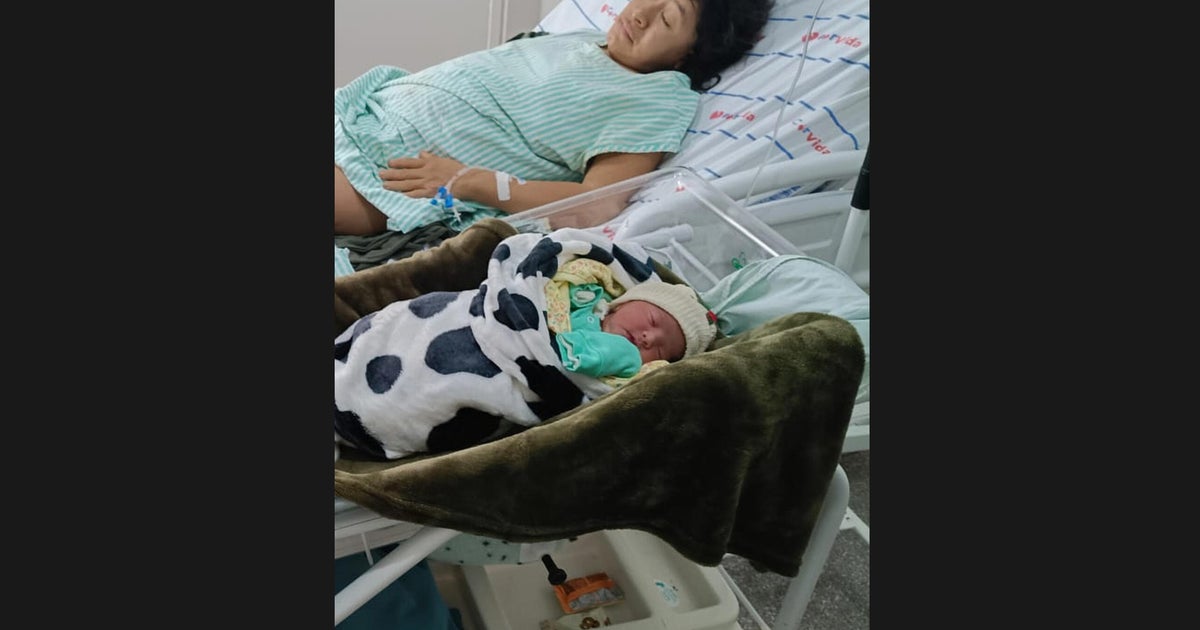
In the heart of the Brazilian Amazon, a small miracle has emerged from one of humanity’s darkest chapters. For years, three Indigenous women—Pugapia and her daughters Aiga and Babawru—lived as the final remnants of the Akuntsu people, a tribe nearly wiped from existence by violence and greed. Their story is one of unspeakable tragedy: a thriving community reduced to just a handful of survivors following brutal attacks by ranchers during Brazil’s aggressive push into the rainforest during the 1970s and 1980s. These women carried the weight of their people’s entire history, language, and culture on their shoulders, watching helplessly as time passed without any hope of continuation. As they grew older with no men left in their community and no children to carry forward their bloodline, it seemed inevitable that the Akuntsu would simply fade into history, becoming another forgotten footnote in the devastating story of Indigenous genocide in the Americas. But in December, everything changed when Babawru, the youngest of the three women who is believed to be in her 40s, gave birth to a baby boy named Akyp. This unexpected arrival has transformed despair into possibility, offering not just a lifeline for the Akuntsu people but also renewed hope for the fragile Amazon ecosystem they protect.
A Territory Under Siege and the Price of “Progress”
The near-extinction of the Akuntsu cannot be separated from the broader assault on the Amazon rainforest that accelerated during Brazil’s military dictatorship. In the 1970s, the government launched an aggressive campaign to occupy and develop the Amazon, viewing the vast wilderness as empty land waiting to be conquered rather than a living ecosystem inhabited by countless Indigenous communities. Rondonia state, where the Akuntsu have lived for generations, became a focal point of this destructive vision. With financial backing from institutions like the World Bank, Brazil paved highways through pristine forest and encouraged waves of settlers from other parts of the country to migrate westward with promises of land and prosperity. The population of Rondonia more than doubled during the 1980s as people flooded into the region. These newcomers were told they could claim land titles if they cleared the forest for agriculture, creating a perverse incentive structure that made Indigenous people obstacles to be removed rather than rightful inhabitants to be respected. The result was predictable and horrifying: hired gunmen carried out systematic attacks on Indigenous groups including the Akuntsu, massacring families and destroying communities in what can only be described as genocide driven by economic interest. When Brazilian government agents from Funai, the Indigenous protection agency, finally made contact with the Akuntsu in 1995, they found just seven survivors bearing physical and psychological scars from these attacks. Evidence of the violence was everywhere, and the survivors themselves carried gunshot wounds as permanent reminders of the day their world ended.
An Island of Green in a Sea of Destruction
Today, satellite imagery tells a stark visual story about what the Akuntsu have preserved despite everything they’ve endured. The Rio Omere Indigenous Land, officially protected by Funai in 2006, appears as a vibrant island of green forest completely surrounded by a monotonous landscape of cattle pastures, soy fields, and corn plantations. This small patch of intact rainforest stands as living proof of what researchers have long understood: Indigenous territories are among the most effective tools for preventing deforestation and protecting biodiversity. A comprehensive 2022 analysis by MapBiomas, a network of environmental organizations that tracks land use across Brazil, found that Indigenous territories had lost just 1% of their native vegetation over three decades, while private lands nationwide lost 20% during the same period. In Rondonia specifically, approximately 40% of the original forest cover has been destroyed, with most of what remains now existing only within conservation areas and Indigenous lands. This makes the protection of places like the Akuntsu territory critically important not just for the survival of these specific communities but for the health of the entire Amazon basin and, by extension, the global climate. Scientists increasingly warn that continued deforestation could push the Amazon past a tipping point, transforming the world’s largest rainforest from a carbon sink that helps regulate global temperatures into a carbon source that accelerates climate change, with catastrophic consequences for all of humanity.
The Decision Not to Bring Children Into a Broken World
After the last Akuntsu man died in 2017, the three surviving women faced an impossible reality. Babawru, Aiga, and their mother Pugapia had made a conscious, heartbreaking decision: they would not become mothers. This wasn’t simply about the absence of Akuntsu men with whom they could continue their lineage in the traditional sense. According to anthropologist Amanda Villa, who studies isolated Indigenous peoples, the women’s decision reflected something much deeper—a belief that their world had become fundamentally disorganized and unsuitable for raising children. The Akuntsu lived with what Villa describes as “a somewhat catastrophic understanding” of their situation, shaped directly by the violence that had destroyed their community. In their worldview, raising children properly required not just parents but a complete social structure, including men who could perform and teach tasks considered masculine responsibilities like hunting and shamanic spiritual practices. Without these essential elements of their culture intact, the women felt they could not provide the kind of upbringing an Akuntsu child deserved. Linguist Carolina Aragon, the only outsider who has learned to communicate with the women in their own language, explains that the genocide and its aftermath created a breakdown of social relations that shaped every aspect of how the survivors viewed their future. For decades, they lived isolated from the non-Indigenous world, showing little interest in it, maintaining their territory with assistance from the neighboring Kanoe people—another small Indigenous group with whom they share the protected land despite language barriers and cultural differences that make their relationship complex.
A Pregnancy That Changed Everything
When Babawru became pregnant by a Kanoe man last year, it wasn’t planned or expected. In fact, according to Aragon, who has worked closely with the Akuntsu women for years, Babawru had always been careful to prevent pregnancy, in keeping with the decision the three women had made together. When an ultrasound confirmed she was carrying a child, Babawru was stunned, asking in disbelief, “How can I be pregnant?” The news represented not just a biological reality but a profound challenge to everything the women had resolved about their future. Yet something shifted in that moment of surprise. Rather than viewing the pregnancy as a crisis or unwanted complication, the three women began to see it as an opportunity—a chance to write a new chapter in the Akuntsu story rather than simply waiting for the final page to turn. With support from Funai officials and the neighboring Kanoe community, they chose to welcome the child and begin adapting their traditions to new circumstances. The fact that the baby turned out to be a boy created particular possibilities that resonated with the women’s earlier concerns. Villa notes that having a male child opens the door to eventually restoring traditionally male roles within the community, such as hunting and spiritual leadership, which the women had believed were impossible without Akuntsu men to pass down this knowledge. Aragon, who supported Babawru remotely during labor through video calls and was present at key moments throughout the pregnancy, describes this transformation as remarkable evidence that “the future can surprise everyone.”
Hope for a People and a Planet
Little Akyp’s birth carries significance that extends far beyond one small community in the Amazon. Joenia Wapichana, president of Funai, describes the child as “not only a symbol of the resistance of the Akuntsu people, but also a source of hope for Indigenous peoples” everywhere who face threats to their survival and their lands. The baby’s arrival demonstrates how protection of Indigenous territories and the survival of Indigenous peoples are inseparably connected—each one depending on the other. Researchers and officials who have worked with the three Akuntsu women have always understood that securing permanent protection for their territory depended on the continuation of the Akuntsu as a living people, not just a memory. They wanted to avoid repeating the situation of Tanaru, an Indigenous man who lived alone in the forest for decades until his death in 2022, after which non-Indigenous groups immediately began fighting over his land. A 2024 report by Survival International identified 196 uncontacted Indigenous groups worldwide facing threats from logging, mining, and agribusiness, warning that half could disappear within a decade without action. Against this grim backdrop, Akyp represents possibility. He will grow up forming emotional bonds with the forest and its creatures, just as his mother and grandmother have, but he will also represent a bridge between the traumatic past and an uncertain future. Aragon wonders what kind of relationship this boy will develop with his territory and expresses hope that it will be “the best possible, because he has everything he needs there.” In a world facing climate catastrophe and biodiversity collapse, the story of the Akuntsu reminds us that the survival of Indigenous peoples and the protection of the natural world are not separate challenges but two sides of the same struggle—and that even after the darkest violence and loss, life finds a way to persist, adapt, and offer hope.