


Rising Tensions: U.S. Authorizes Evacuations from Israel Amid Nuclear Standoff with Iran
Diplomatic Efforts Show Fragile Progress
The situation in the Middle East has reached a critical juncture as the United States State Department took the significant step of authorizing voluntary departures for non-emergency government personnel and their families from Israel on Friday. While the official guidance cited unspecified “safety risks,” the move comes against a backdrop of increasingly tense negotiations between the U.S. and Iran over Tehran’s nuclear program. The timing is hardly coincidental—President Trump has prepared for potential military action with a massive deployment to the Middle East, even as diplomatic channels remain open through talks brokered by Oman. Following the latest round of indirect negotiations held Thursday in Geneva, Iran’s top diplomat Abbas Araghchi offered a cautiously optimistic assessment, describing the discussions as “one of the most serious and longest rounds of talks” to date. Despite these diplomatic efforts, President Trump has made his position clear: if negotiations fail to produce an acceptable agreement to rein in Iran’s nuclear ambitions, military strikes remain on the table. Several independent experts who spoke with CBS News expressed skepticism that both sides could reach a mutually acceptable agreement, suggesting that an American military intervention might not only be likely but could happen soon. The State Department’s travel advisory stopped short of mentioning Iran directly, but warned that the U.S. Embassy might further restrict government employee travel “in response to security incidents and without advance notice” to certain areas including the Old City of Jerusalem and the West Bank. Perhaps most tellingly, the advisory suggested that private citizens “may wish to consider leaving Israel while commercial flights are available”—a sobering reminder that regional airports often halt operations when military action becomes imminent.
The Nuclear Negotiations: A Race Against Time
Behind the scenes, U.S. special envoys Steve Witkoff and Jared Kushner, President Trump’s son-in-law, have been leading the American negotiating team in talks with Iran. However, the administration offered no official readout from Thursday’s Geneva discussions, leaving the public to rely on statements from Iranian and Omani officials for insight into the proceedings. While outside analysts see little cause for optimism, both Iran and Oman—the nation serving as mediator in these high-stakes talks—attempted to frame the meetings in a positive light. Iranian Foreign Minister Abbas Araghchi acknowledged the complexity of the situation, stating that “regarding some issues, there is now an understanding, and on others, it’s natural that we have differences.” What distinguished this round of talks, according to Araghchi, was a newfound seriousness from both parties in seeking a negotiated solution to avoid what many fear could escalate into a broader regional conflict. The talks appear to have produced at least some procedural progress, with agreement reached for technical teams to begin work in Vienna on Monday. These experts will collaborate with the International Atomic Energy Agency (IAEA) to develop frameworks for addressing technical issues related to Iran’s nuclear program. Following consultations in their respective capitals, both sides committed to a fourth round of negotiations the following week. This structured approach suggests that despite the dire warnings and military preparations, neither side has completely abandoned hope for a diplomatic resolution.
Trump’s Demands and the Shadow of Military Action
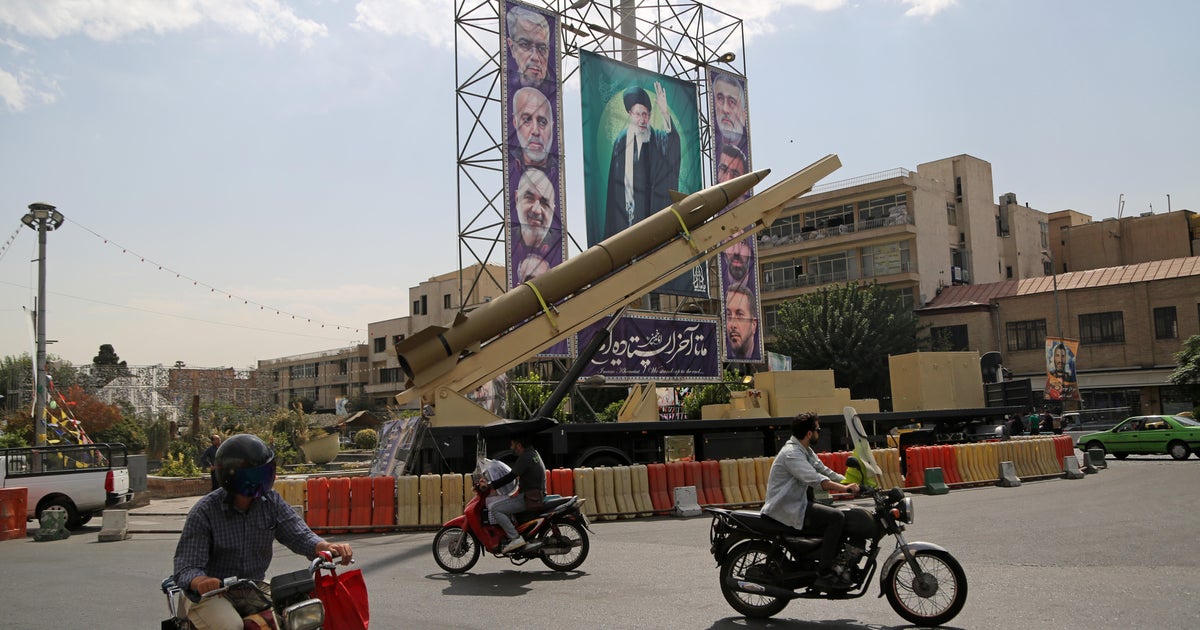
President Trump and Secretary of State Marco Rubio have both publicly stated their preference for a negotiated settlement to the nuclear standoff. However, the administration’s position extends beyond simply limiting Iran’s nuclear enrichment capabilities. Rubio has accused Tehran of attempting to rebuild its nuclear program following U.S. strikes in June of the previous year that severely damaged Iran’s three primary enrichment facilities. What remains unclear is whether President Trump would accept a new agreement focused solely on curtailing Iran’s nuclear ambitions without addressing other significant American concerns. Chief among these additional grievances are Iran’s substantial stockpile of conventional ballistic missiles and its continued support for armed proxy groups throughout the region—militias and organizations that have long been thorns in the side of U.S. interests and allies in the Middle East. Vice President JD Vance provided some insight into the administration’s thinking in comments to The Washington Post, acknowledging that President Trump was still considering military strikes “to ensure Iran isn’t going to get a nuclear weapon” while remaining open to diplomatic solutions. Vance also pushed back against warnings from regional nations, including some of America’s closest Middle Eastern partners, that any U.S. military action could trigger a prolonged, multi-national conflict. “The idea that we’re going to be in a Middle Eastern war for years with no end in sight—there is no chance that will happen,” Vance insisted, projecting confidence that any military engagement could be controlled and concluded swiftly.
The Lessons of Last June’s Limited War
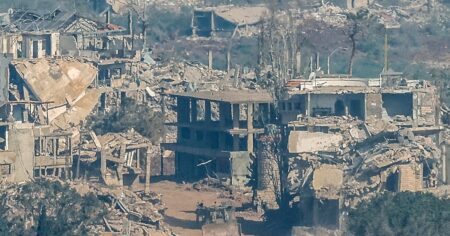
The current crisis exists in the shadow of last June’s 12-day conflict, when President Trump ordered strikes on Iran’s nuclear facilities in coordination with Israel. That military action, dubbed “Operation Midnight Hammer,” provided a preview of how quickly tensions can escalate and how difficult they are to contain. Tehran responded to those strikes by launching missiles at the largest U.S. military base in the Middle East, though President Trump later indicated that the retaliation had been telegraphed in advance, allowing American forces to intercept the incoming projectiles. Ten days before that exchange, Iran had fired a barrage of missiles at Israel in response to Israeli attacks, and one of those missiles managed to penetrate Israel’s sophisticated air defense systems, landing in the heart of Tel Aviv—a stark demonstration of the limits of even the most advanced protective technologies. While Israel succeeded in inflicting serious damage on Iran’s ballistic missile capabilities during that June conflict, intelligence assessments suggest that Iran has worked diligently to restock its arsenal. Some outside observers now believe Tehran possesses hundreds of rockets capable of targeting both Israel and American military assets throughout the region. This rebuilding of offensive capabilities adds another layer of complexity to the current negotiations, as it demonstrates Iran’s resilience and determination to maintain its strategic deterrent even in the face of devastating attacks. The question that haunts current diplomatic efforts is whether limited strikes like Operation Midnight Hammer can achieve lasting results, or whether they merely postpone an inevitable, more extensive military confrontation.
Expert Analysis: The View from the Pentagon
Retired U.S. Army Lieutenant General H.R. McMaster, who served as national security adviser during President Trump’s first administration and now contributes to CBS News, offered a sobering assessment of the diplomatic prospects on Thursday. McMaster predicted that the Trump administration would ultimately fail to find sufficient common ground with Iran’s hardline Islamic leadership to prevent another military clash. His reasoning centered on the fundamental ideology of Iran’s theocratic dictatorship and what he described as its “permanent hostility to the United States and Israel.” According to McMaster, this ideological rigidity would result in “intransigence and an inability to make concessions on enrichment, the missile program, and support for terrorist organizations”—precisely the issues where American demands are most firm. Drawing on his experience commanding U.S. forces in the Middle East, McMaster suggested that any future military action would look substantially different from last June’s limited operation. Rather than another “signaling exercise” focused narrowly on nuclear facilities, McMaster predicted “the opening campaign will be extensive,” designed to comprehensively degrade Iran’s military capabilities. He expressed confidence that Iran would have “very limited options to retaliate and expand the conflict” due to extensive U.S. air defense systems, offensive counter-air capabilities, and long-range strike assets now positioned in the region. This assessment reflects a military perspective that sees deterrence through overwhelming force as more effective than graduated escalation, though it stands in contrast to diplomatic efforts still underway in Geneva and Vienna.
A Global Exodus: The International Community Responds
The United States is far from alone in advising its citizens to leave the region, as Friday’s travel advisory update joined a growing chorus of international warnings. Australia took action on Wednesday, instructing dependents of its diplomats in Israel and neighboring Lebanon to depart, while offering voluntary evacuation to dependents in the United Arab Emirates, Qatar, and Jordan—a geographic spread that illustrates how widely the potential conflict zone is perceived to extend. Since mid-January, India, Brazil, Singapore, and at least six European nations have warned their citizens against traveling to Iran and urged those already in the country to leave immediately, citing the deteriorating security situation. Even China, which has generally maintained cordial relations with Tehran, advised Chinese nationals in Iran to evacuate according to state-run media reports on Friday. This unprecedented wave of travel warnings and voluntary evacuations signals that governments around the world are taking the threat of military action seriously, regardless of what their public diplomatic statements might suggest. For ordinary citizens caught in the region—whether long-term residents, business travelers, or tourists—the message is becoming increasingly clear: commercial flight options may not remain available indefinitely, and those who can leave should seriously consider doing so while the opportunity exists. The steady drumbeat of these warnings from diverse nations creates its own momentum, as each new advisory reinforces the sense that something significant may be about to happen. Whether these preparations prove to be prudent precautions before a storm that never arrives, or the necessary first steps before a conflict that reshapes the Middle East, remains to be seen. What is certain is that the window for purely diplomatic solutions is narrowing, and the world is watching the Geneva and Vienna negotiations with the understanding that failure there could mean the difference between an uneasy peace and a devastating war.