


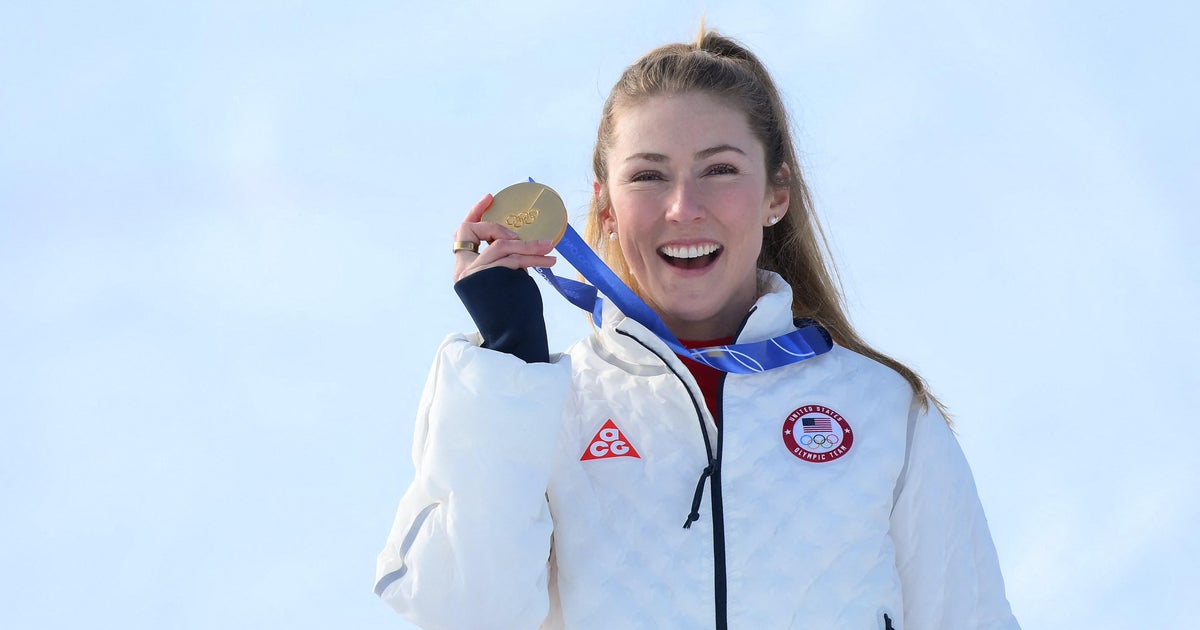

Mikaela Shiffrin’s Triumphant Return: A Golden Moment Eight Years in the Making
Breaking the Drought with Determination and Grace
After what must have felt like an eternity for one of skiing’s greatest athletes, Mikaela Shiffrin finally broke through her Olympic medal drought in spectacular fashion on Wednesday, capturing gold in the women’s slalom at the 2026 Winter Olympics. The 30-year-old American skiing sensation, who holds the record as the most decorated athlete in her sport’s history, delivered a masterclass performance that reminded the world why she’s considered one of the all-time greats. Her combined time of 1:39.10 across two runs wasn’t just good—it was dominant, beating Switzerland’s Camille Rast by a commanding 1.5 seconds, with Sweden’s Anna Swenn Larsson rounding out the podium in third place. The emotion was raw and real as Shiffrin crossed the finish line, visibly stunned by her achievement after completing what she described as a smooth second run in the event that has always been her bread and butter.
What made this victory even sweeter was the weight of expectation and disappointment that Shiffrin had been carrying on her shoulders. Coming into this race, she had endured eight consecutive Olympic events without reaching the podium—a drought that stretched back to the 2018 PyeongChang Winter Games, where she had last tasted Olympic success with both gold and silver medals. For someone who routinely dominates on the World Cup circuit, these Olympic struggles represented an unusual and painful chapter in an otherwise stellar career. The pressure of being the favorite, the expectations of a nation, and the unpredictable nature of Olympic competition had conspired to keep her off the medal stand for far too long. But on this day in Milan Cortina, everything clicked into place, and Shiffrin showed the mental fortitude and technical brilliance that have defined her career.
A Career Built on Excellence and Resilience
Shiffrin’s Olympic journey began with a bang back in 2014 at the Sochi Games when, at just 18 years old, she announced her arrival on the world stage by winning gold in the slalom event at her very first Olympics. That early success set the stage for what everyone assumed would be a career filled with Olympic hardware to match her World Cup dominance. However, the Olympics have a way of humbling even the greatest athletes, and Shiffrin’s path has been anything but straightforward. Her ability to bounce back from disappointment, injury, and the immense pressure that comes with being considered the best in the world speaks volumes about her character and determination. This latest gold medal, won at age 30, represents not just athletic excellence but also personal growth and resilience in the face of adversity.
Just days before her golden triumph, Shiffrin had competed in the women’s giant slalom event, where despite being among the favorites, she finished in 11th place. While her runs were clean and technically sound, they simply weren’t fast enough to challenge for the top positions. Italy’s Federica Brignone took home the gold in that event, her second gold and fifth overall medal of the Milan Cortina Games. What’s remarkable is how Shiffrin responded to this disappointment—instead of dwelling on her own performance, she was genuinely enthusiastic about Brignone’s skiing, calling it “the greatest show of GS skiing that we’ve had in a really long time.” Her graciousness in defeat and her genuine appreciation for exceptional skiing, even when it comes at her own expense, demonstrates the kind of sportsmanship that makes her not just a great athlete but also a wonderful ambassador for her sport.
Overcoming Physical and Mental Challenges
The road to this Olympic gold was paved with significant obstacles that would have derailed lesser athletes. In 2024, Shiffrin crashed during training on the course for the 2026 Milano Cortina Olympics after losing control, a frightening reminder of the dangers inherent in alpine skiing. Then, in another crash last year, she suffered a puncture wound and severe trauma to her oblique muscles—injuries that are not only painful but can also shake an athlete’s confidence. Perhaps most significantly, Shiffrin has been open about dealing with post-traumatic stress disorder stemming from her crashes, a mental health challenge that adds another layer of difficulty to competing at the highest level. The fact that she was able to work through these physical injuries and mental health challenges to deliver a gold-medal performance speaks to her incredible strength, both physical and mental.
Earlier in these Olympics, Shiffrin finished in 15th place in the slalom portion of the women’s skiing team combined race, though she and fellow American skiing star Breezy Johnson managed to secure fourth place overall in that event. These mixed results leading up to the individual slalom could have easily planted seeds of doubt in her mind. Would her body hold up? Was the mental game strong enough? Could she handle the pressure of being expected to win? As she stood at the top of the course for her second run, holding a lead but knowing that anything could happen, all of these questions hung in the balance. Her ability to push those doubts aside and execute two nearly flawless runs under the most intense pressure imaginable is what separates champions from everyone else.
The Emotional Release of Victory
When Shiffrin crossed the finish line and realized she had won, the emotional dam broke. For someone who has experienced so much success on the World Cup circuit, winning more races than any skier in history, the Olympic podium had become an almost mythical place—somewhere she belonged but couldn’t quite reach in recent years. The tears, the stunned expression, the visible relief—all of it was genuine and relatable. Here was one of the greatest athletes of our generation, reduced to the same emotions any of us would feel after finally achieving something we’d worked so hard for and waited so long to accomplish. It was a reminder that beneath the superhuman performances and record-breaking achievements, elite athletes are still human beings with the same hopes, fears, and emotional needs as the rest of us.
Her first run had been exceptional, clocking in at 47.13 seconds and giving her a cushion over Rast, Larsson, Germany’s Lena Duerr, and the rest of the field. But as any skier knows, a lead after the first run means nothing if you can’t hold it together for the second. The slalom, with its quick turns and demand for precision, is unforgiving of even the smallest mistakes. One missed gate, one moment of hesitation, one slight loss of balance—any of these could have cost her the gold medal she so desperately wanted. But Shiffrin’s second run was described as smooth, a testament to her ability to manage her nerves and trust in the thousands of hours of training that had prepared her for this moment. When she saw her final time and realized the gold was hers, years of frustration, disappointment, and doubt melted away in an instant.
A Legacy Cemented and a Future Still Bright
With this victory, Mikaela Shiffrin adds another chapter to what is already one of the most impressive careers in skiing history. As the most decorated athlete in her sport’s history, she has nothing left to prove to anyone—except perhaps herself. This gold medal won’t change her legacy in any fundamental way; she was already considered one of the all-time greats. But what it does do is provide a sense of completion, answering the questions about whether she could still perform at the highest level on the Olympic stage and whether she had the mental strength to overcome the disappointments of recent years. The answer, delivered with authority on the slopes of Milan Cortina, is a resounding yes.
Looking ahead, at 30 years old, Shiffrin has potentially more Olympics in her future if she chooses to continue competing. Alpine skiers have been known to compete successfully well into their thirties, and with her technical skill and intimate knowledge of what it takes to win, there’s no reason to think she couldn’t add to her medal collection in future Games. But regardless of what comes next, this moment—standing on top of the podium, hearing her national anthem, and wearing the gold medal she worked so hard to win—will stand as one of the defining moments of her career. It’s a reminder that champions aren’t defined by their victories alone, but by their ability to face defeat, learn from it, and come back stronger. Mikaela Shiffrin has done exactly that, and in doing so, she’s given us all a masterclass in resilience, determination, and the pursuit of excellence.