

Iran’s Supreme Leader Assassinated: The Critical Question of Succession
A Leadership Vacuum at the Worst Possible Time
The assassination of Iran’s Supreme Leader Ayatollah Ali Khamenei has thrust the Islamic Republic into uncharted territory at perhaps the most dangerous moment in its 45-year history. For nearly four decades, Khamenei wasn’t just Iran’s highest religious authority—he was the ultimate political decision-maker, the anchor of a complex power structure designed specifically to prevent the kind of instability his death has now triggered. Killed in the early hours of what has become an escalating conflict between the U.S., Israel, and Iran, Khamenei’s death at his sprawling Tehran compound has left a gaping hole in the country’s leadership during an active war. Officially, the responsibility for choosing his replacement falls to the Assembly of Experts, a powerful clerical body created for exactly this purpose. But everyone who understands how Iran actually works knows the real decision will come from a much smaller, more secretive circle: senior clerics, the Islamic Revolutionary Guard Corps commanders, and the shadowy security establishment that has always been the true backbone of the regime’s power. This isn’t just about replacing one man—it’s about maintaining control of an entire system at its most vulnerable moment.
The Frontrunner: Mojtaba Khamenei and the Dynasty Question
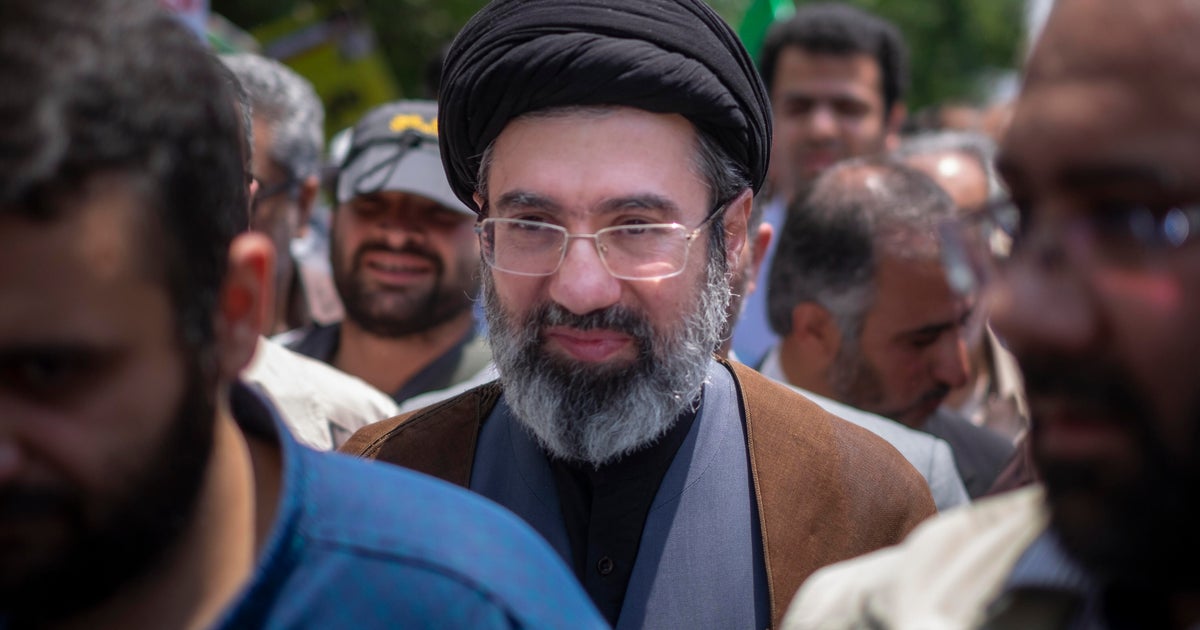
The name most frequently mentioned in hushed conversations among Iran’s elite is Mojtaba Khamenei, the late leader’s second son. Unlike many public-facing figures in Iran’s government, Mojtaba has never sought elected office or cultivated a public persona. Instead, he’s spent years working quietly behind the scenes from within his father’s office, methodically building relationships and accumulating influence across the security establishment, especially within the Revolutionary Guard. He has the revolutionary credentials that matter in Iran’s system: he studied theology in Qom, the country’s spiritual center, and fought as a young volunteer during the brutal Iran-Iraq war in the 1980s. But his real authority doesn’t come from religious scholarship or battlefield glory—it comes from proximity to power and the deep relationships he’s cultivated with the people who actually run Iran. Mehran Kamrava, a Georgetown University professor and Iran expert, believes that if Mojtaba is chosen, it will reveal the system’s deepest priorities. “The deep state in the Islamic Republic wants continuity,” Kamrava explained. “If Mojtaba indeed is chosen as his father’s successor, it would indicate more than anything else that the Islamic Republic is trying to ensure continuity.” His selection would also mark something entirely new for the Islamic Republic: essentially keeping supreme power within the same family, a move that would transform Iran’s leadership into something resembling a dynasty. The assumption among Iran’s power brokers is that Mojtaba can maintain the delicate balance his father managed—keeping nominal authority over the Revolutionary Guard despite the organization’s enormous independent power. If the system chooses him, it’s choosing the safest bet in the most dangerous of times.
The Other Contenders: Clerics, Judges, and Revolutionary Bloodlines
While Mojtaba may be the frontrunner, several other names are circulating among those who will actually make this decision. Ayatollah Alireza Arafi represents the traditional clerical establishment—he serves on both the Guardian Council and the Assembly of Experts and has spent years overseeing Iran’s influential network of seminaries in Qom. Following Khamenei’s assassination, Arafi was reportedly elevated to a temporary leadership council tasked with steering the country through both the war and the succession process, giving him valuable visibility at a critical moment. Then there’s Ayatollah Sadeq Larijani, a former judiciary chief from one of Iran’s most powerful political families, whose combination of clerical credentials and deep establishment ties have long made him a plausible successor. Some analysts have pointed to Hassan Khomeini, grandson of the Islamic Republic’s founder, Ayatollah Ruhollah Khomeini, as a possibility. He commands respect among clerics and reformist circles, carrying the weight of his grandfather’s legacy, though his relatively moderate reputation might make him unpalatable to Iran’s hardline establishment. Finally, there’s Mohammad Mehdi Mirbagheri, a hardline cleric ideologically aligned with the most conservative factions, who appeals to those wanting to double down on revolutionary purity. Each candidate represents a different possible direction for Iran, but all are being evaluated against the same criteria: Can they hold the system together when it’s under the most intense pressure it has faced since the 1979 revolution?
Unprecedented Circumstances: Succession During Wartime
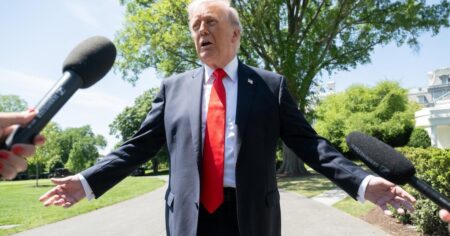
What makes this succession fundamentally different from the last one—when Ayatollah Ruhollah Khomeini died in 1989 and Khamenei himself emerged as the compromise choice after intense negotiations—is that it’s happening during an active, escalating war. Khamenei was killed during the opening phase of a conflict that has already spread beyond Iran’s borders, with missile and drone attacks rippling across the Gulf and the broader Middle East. Several other senior Iranian officials were reportedly killed in those same early strikes, eliminating potential successors and further narrowing the field. Leadership transitions in the Islamic Republic are normally carefully choreographed affairs, conducted in relative calm with time for backroom dealing and consensus-building. This time, the process is unfolding while bombs are falling. President Trump has even weighed in, dismissively stating that Iranian officials working on selecting the next supreme leader are “wasting their time.” “Khamenei’s son is a lightweight. I have to be involved in the appointment, like with Delcy [Rodriguez] in Venezuela,” Trump said, referring to the interim president who assumed power after the U.S. captured Nicolás Maduro. Whether this is bluster or signal of American intentions to influence or even prevent a succession remains unclear, but it adds another layer of pressure and uncertainty to an already unprecedented situation. The Islamic Republic’s power brokers are essentially trying to maintain constitutional order while fighting a war, dealing with potential American interference, and managing the shock of losing the leader who has defined their system for nearly forty years.
A Generational Shift in Iran’s Military Power Structure
Beyond the question of who becomes the next supreme leader, another fundamental change is quietly reshaping Iran’s future: a generational transition within the Revolutionary Guard itself. Many of the commanders who defined Iran’s military posture and foreign policy for decades were veterans of the Iran-Iraq war, and that experience, according to Kamrava, often made them more pragmatic. “The commanders of the Revolutionary Guards who were killed were those who had cut their teeth in the Iran-Iraq war,” Kamrava explained. “They had seen battle close up and they had moderated.” Their replacements represent something different—a generation that didn’t experience that particular crucible. “The younger generation… are far more radical, far less pragmatic,” Kamrava added. This shift in the Guard’s leadership may ultimately shape Iran’s direction as much as or more than whoever becomes supreme leader. If the next leader is Mojtaba or another figure without independent clerical authority or battlefield credentials, they may find themselves more dependent on these younger, more radical commanders rather than able to control them. This generational change is happening precisely when Iran faces its greatest external threats, creating conditions where hardline voices arguing for escalation and confrontation may carry more weight than cautious counsel. The combination of a new, potentially weaker supreme leader and a more radical Guard leadership could make Iran more unpredictable and aggressive, or it could create internal tensions that weaken the regime’s coherence at a critical time.
Survival Instincts: Will Anything Actually Change?
Despite the shock of Khamenei’s assassination and the unprecedented circumstances surrounding the succession, most analysts don’t expect Iran’s fundamental political system to transform overnight. When asked whether a leadership transition might bring significant change, Kamrava was direct: “I don’t think we’re going to see radical shifts in the way the Islamic Republic conducts itself.” The regime has survived multiple existential crises over the past four decades—the Iran-Iraq war, international sanctions, waves of protests, and economic collapse. Its survival instinct is deeply embedded in how power actually works in Iran. The structure remains intact: clerics, Revolutionary Guard commanders, and security institutions still dominate the state, and their priority, especially during wartime, is stability above all else. The system may make tactical adjustments—in the past, Iranian leaders have loosened certain social restrictions after major crises to ease domestic pressure—but strategically, the Islamic Republic’s basic orientation toward maintaining power and resisting Western influence is unlikely to change regardless of who sits at the top.
Whoever emerges as Iran’s next supreme leader will inherit a country under immense strain from multiple directions: a widening regional war, a battered economy suffering under decades of sanctions, and a population that has repeatedly taken to the streets over the past decade demanding change. The Islamic Republic has proven remarkably resilient over the years, adapting to survive challenges that would have toppled less entrenched regimes. But this moment genuinely is different. For the first time since the 1979 revolution, Iran’s supreme leader has been killed during a war, and the system he helped build and maintain is now being tested in real time, with the world watching to see whether it can hold together or whether this assassination marks the beginning of the end for the Islamic Republic as we’ve known it. The coming weeks will reveal not just who Iran’s next leader will be, but whether the system itself can survive its greatest test.