


The Epstein Files: How a Sex Offender’s Network Brought Down Europe’s Elite
The release of thousands of pages of documents related to convicted sex offender Jeffrey Epstein has triggered a political earthquake across Europe, toppling diplomats, politicians, and even royalty. While the files were published by the U.S. Department of Justice following intense public pressure and rare bipartisan cooperation in Washington, the fallout has been dramatically more severe on the other side of the Atlantic. From London to Oslo, the revelations have dominated headlines, ended promising careers, and sparked both criminal investigations and soul-searching about accountability among the powerful. The contrast between Europe’s swift response and America’s more muted reaction raises important questions about how different societies hold their elites accountable.
The casualties include some of Europe’s most prominent figures: a British prince stripped of his titles, a former UK ambassador fired and facing potential criminal charges, senior Norwegian diplomats suspended, and political advisers forced to resign in Slovakia. What’s particularly striking is that none of these individuals—apart from Prince Andrew—faces allegations of sexual misconduct. Instead, they’ve been brought down for something else entirely: maintaining friendly relationships with Epstein even after his 2008 conviction for sexual offenses involving a minor. As international law specialist Mark Stephens colorfully put it, “Epstein collected powerful people the way others collect frequent flyer points. But the receipts are now in public, and some might wish they’d traveled less.” The message from European publics has been clear: associating with a known sex offender, regardless of personal involvement in his crimes, is disqualifying for those in positions of trust and authority.
Britain’s Reckoning: From Prince Andrew to Peter Mandelson
The United Kingdom has experienced some of the most dramatic consequences from the Epstein revelations. Prince Andrew, brother to King Charles III, has already paid a heavy price for his association with Epstein, having lost his royal honors, his title of “His Royal Highness,” and his taxpayer-funded residence. He settled a lawsuit with one of Epstein’s victims for millions of dollars and now faces renewed pressure to provide testimony in the United States. His ex-wife Sarah Ferguson has also been caught in the scandal’s wake, with her charity shutting down this week amid the controversy.
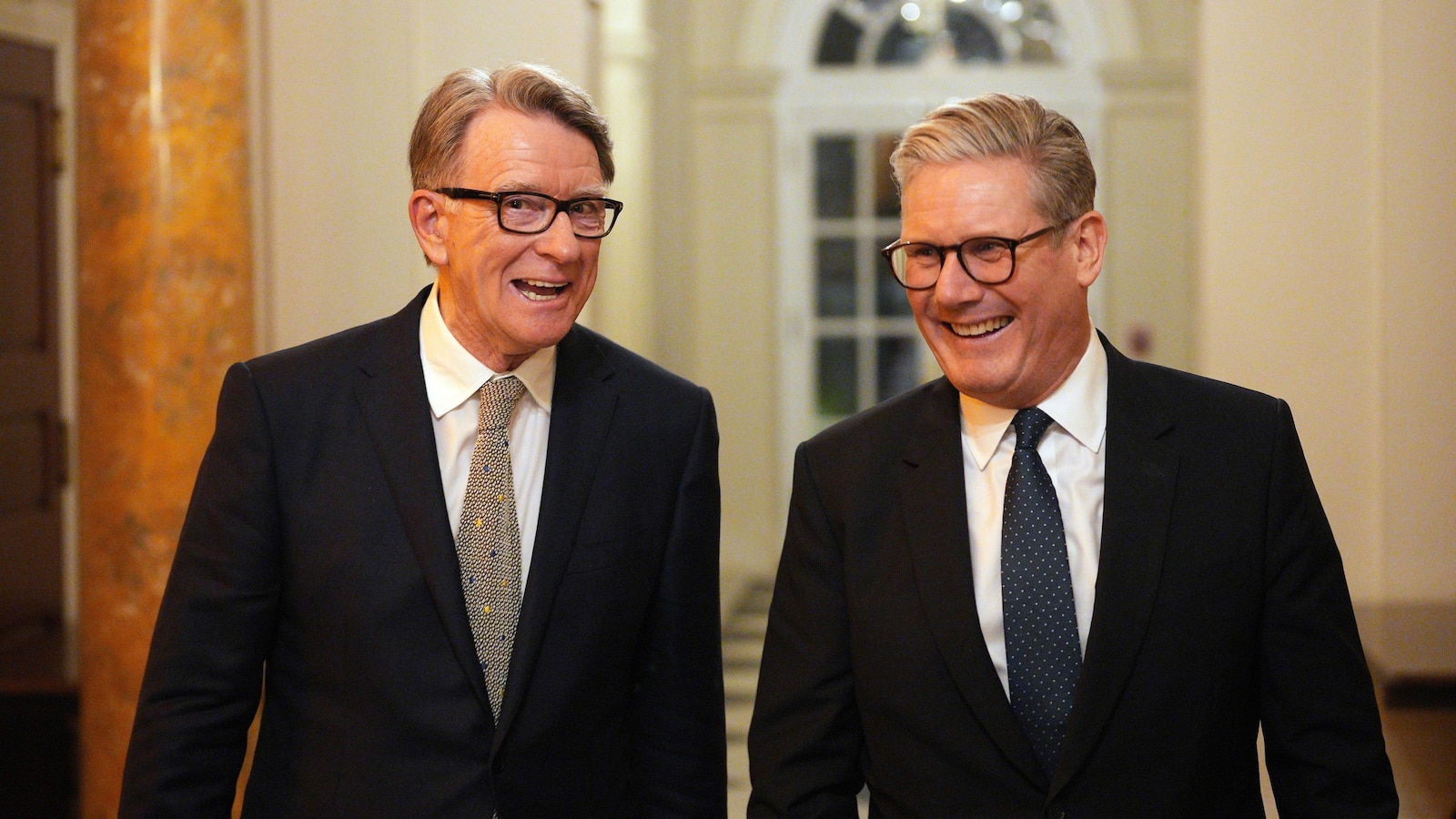
But the figure currently at the center of Britain’s Epstein storm is Peter Mandelson, a veteran politician who was appointed as UK Ambassador to Washington before being dramatically fired by Prime Minister Keir Starmer. Mandelson had long minimized his relationship with Epstein, despite having referred to him as “my pest pal” back in 2003. The newly released documents, however, tell a different story, revealing that contact between the two continued for years after Epstein’s 2008 imprisonment. In a particularly damaging July 2009 message, Mandelson appeared to reference Epstein’s release from prison as “liberation day”—language that suggests a warmth and ongoing friendship that contradicts his public statements.
The situation has escalated beyond mere political embarrassment. British police have opened an investigation into whether Mandelson committed misconduct in public office by sharing sensitive government information with Epstein. Prime Minister Starmer, who initially appointed Mandelson before firing him in September over earlier Epstein revelations, has publicly apologized to Epstein’s victims and promised to release documents showing that Mandelson lied during the vetting process for his ambassadorial appointment. Yet even these measures may not be sufficient to save Starmer’s leadership, as furious lawmakers question his judgment in making the appointment in the first place. The crisis illustrates how the Epstein scandal continues to claim new victims years after the financier’s death, with the released files acting like political landmines detonating across the landscape of European power.
Scandinavian Shockwaves: Norway Bears the Brunt
Perhaps no country has been as thoroughly shaken by the Epstein files as Norway, a nation of less than six million people that prides itself on transparency and ethical governance. The revelations have reached the highest levels of Norwegian society, from former government leaders to the royal family itself. Thorbjørn Jagland, who served as Norway’s prime minister and later chaired the committee that awards the Nobel Peace Prize, is now under investigation by the country’s economic crimes unit for corruption related to his Epstein ties. Though his lawyer has stated that Jagland will cooperate with investigators, the probe represents a stunning fall for someone who once occupied positions of such international prestige.
The scandal has also ensnared Terje Rød-Larsen and Mona Juul, a high-profile diplomatic couple who played crucial roles in the 1990s Oslo Accords peace negotiations between Israel and Palestine. Juul, who most recently served as Norway’s ambassador to Jordan, has been suspended following revelations that included a particularly disturbing detail: Epstein left the couple’s children $10 million in a will he drafted shortly before his suicide in a New York prison in 2019. The inclusion of their children in Epstein’s will raises uncomfortable questions about the nature and depth of the relationship, going far beyond casual acquaintance or professional networking.
Even Norway’s beloved royal family hasn’t escaped unscathed. Crown Princess Mette-Marit, married to Prince Haakon, the heir to the Norwegian throne, has been forced to address her friendship with Epstein after the files revealed jokey email exchanges and discussions about visits to Epstein’s properties, teeth-whitening appointments, and shopping trips. On Friday, the princess issued a public apology, saying “to all of you whom I have disappointed.” The timing couldn’t be worse for the Norwegian royals, as these revelations coincide with the ongoing trial of the princess’s son from a previous relationship, Marius Borg Høiby, who faces rape charges that he denies. The convergence of these two scandals has significantly damaged public respect for an institution that Norwegians have traditionally held in high regard.
The Wider European Impact: From Slovakia to the Baltics
The ripples from the Epstein documents have spread across the European continent, toppling figures in nations large and small. In Slovakia, Miroslav Lajcak resigned from his position as national security adviser to the prime minister after his communications with Epstein came to light, including exchanges in which the pair discussed “gorgeous” girls—language that, while not directly implicating him in illegal activity, was deemed inappropriate for someone in such a sensitive position. Sweden lost Joanna Rubinstein, a UN official, who quit after revelations of a 2012 visit to Epstein’s private Caribbean island emerged from the files.
In Eastern Europe, three nations—Latvia, Lithuania, and Poland—have launched comprehensive official investigations into the Epstein documents. Poland’s approach has been particularly thorough, with Prime Minister Donald Tusk announcing that a dedicated team would comb through the files for two specific purposes: identifying potential Polish victims of Epstein’s crimes and uncovering any possible connections between the financier and Russian intelligence services. This latter concern reflects ongoing European anxieties about Russian influence operations and the possibility that Epstein’s extensive network of powerful contacts could have been exploited for espionage purposes.
The documents also reveal that Epstein took an active interest in European politics, not merely as an observer but as someone who saw larger patterns and possibilities. In one email exchange with billionaire Peter Thiel, Epstein characterized Britain’s 2016 Brexit vote as “just the beginning” of a broader return to “tribalism”—a remarkably prescient observation given the nationalist and populist movements that have since gained strength across Europe and beyond. Grégoire Roos, who directs the Europe program at the prestigious Chatham House think tank, noted that the files expose Epstein’s “far-reaching” network among European power brokers, including not just those already in positions of authority but “those who were getting there.” As Roos observed, “It will be interesting to see whether in the correspondence he had an influence in policymaking”—a question that investigators across the continent are now seeking to answer.
The Transatlantic Accountability Gap
One of the most striking aspects of the Epstein files saga is the dramatic difference between European and American responses to the revelations. In the United States, where Epstein operated his criminal enterprise and where the documents originated, relatively few high-profile figures have faced serious consequences for their associations with him. The most prominent casualty has been Larry Summers, former Treasury Secretary under President Clinton, who went on leave from his academic positions at Harvard University late last year. Brad Karp resigned as chair of the major law firm Paul Weiss following revelations in the latest document release, and the National Football League announced it would investigate Epstein’s relationship with New York Giants co-owner Steve Tisch, who exchanged crude emails with Epstein about arranging dates with adult women.
Yet other prominent Americans named in the documents have so far escaped significant sanctions. Former Trump strategist Steve Bannon exchanged hundreds of text messages with Epstein. Commerce Secretary Howard Lutnick accepted an invitation to visit Epstein’s private island. Tech billionaire Elon Musk discussed visiting the island in emails, though he maintains he never actually went. Former President Bill Clinton, who Republicans have now compelled to testify before Congress about his Epstein friendship, and President Donald Trump, who has repeatedly faced questions about his past association with the financier, have both been scrutinized—but neither has faced allegations of wrongdoing from any of Epstein’s victims, and neither has experienced career-ending consequences from the revelations.
Rob Ford, a professor of political science at the University of Manchester, suggests that Britain’s response reflects “a more functional media, a more functional accountability structure, that there is still a degree of shame in politics.” In his view, British political culture still maintains standards where “people will say: ‘This is just not acceptable, this is just not done.'” Alex Thomas, executive director of the Institute for Government think tank, points to structural factors, noting that parliamentary democracies, where prime ministers must retain the confidence of Parliament to remain in office, create built-in accountability mechanisms that presidential systems lack. However, experts caution against excessive European self-congratulation, noting that the United States actually has a better track record when it comes to declassifying and publishing sensitive government documents—which is, after all, how these files became public in the first place.
Looking Forward: Investigations and Implications
As investigations continue across multiple countries, the full scope of Epstein’s European network and its implications for policymaking and governance remain unclear. The files have opened a window into how a wealthy financier with criminal proclivities built relationships across the highest levels of European society, gaining access to royalty, diplomats, politicians, academics, and business leaders. What remains to be determined is whether these relationships were merely social—inappropriate given Epstein’s conviction but ultimately harmless—or whether they involved the exchange of information, influence over policy decisions, or compromising situations that could have been exploited for blackmail.
The scandal has already fundamentally altered how European societies think about accountability for their elites. The standard that has emerged is clear: maintaining friendly relations with a convicted sex offender, regardless of personal involvement in criminal activity, is incompatible with holding positions of public trust. This represents a significant evolution in expectations for those in power, extending responsibility beyond one’s own actions to include the company one keeps. Whether this heightened standard will persist or gradually erode as the immediate shock of the revelations fades remains to be seen. What is certain is that the Epstein files have provided a sobering reminder that power, wealth, and prestige do not exempt anyone from scrutiny—and that the truth, even when buried for years, has a way of eventually coming to light with devastating consequences for those who thought their secrets were safe.