


Iran’s Nuclear Sites Show Mysterious Activity After Israeli and U.S. Strikes
Satellite Images Reveal Construction at Bombed Facilities
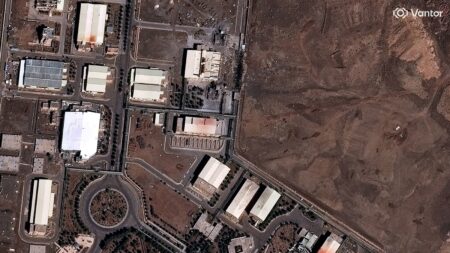
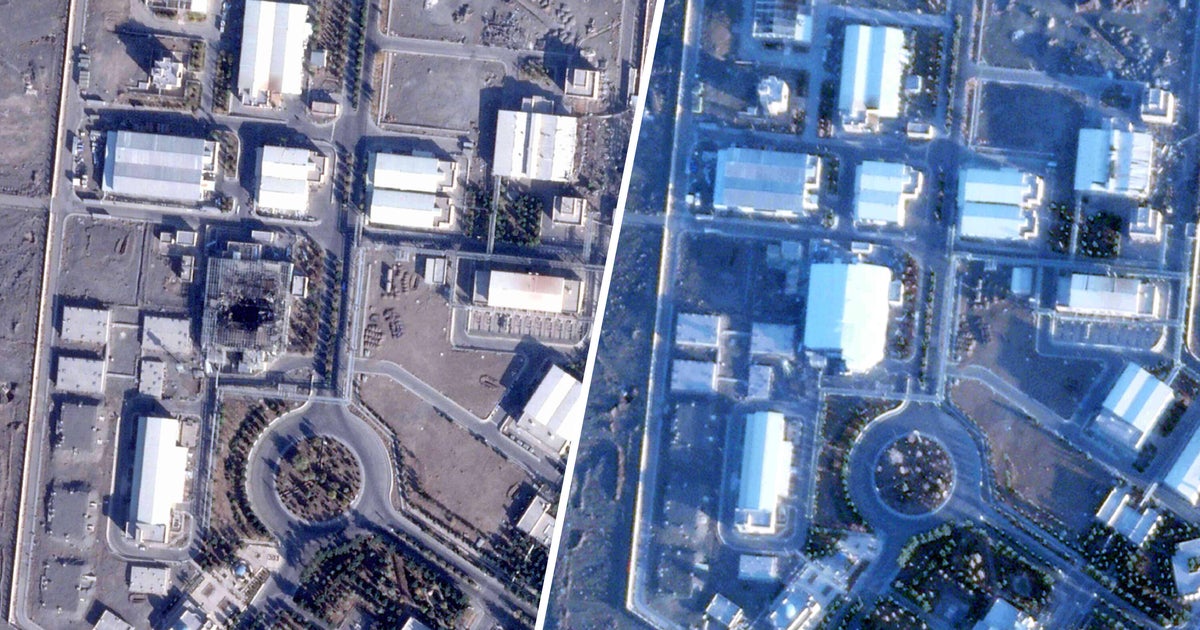
Against the backdrop of escalating tensions over Iran’s violent suppression of nationwide protests, new satellite imagery has uncovered intriguing developments at two Iranian nuclear facilities that were bombed last year by Israel and the United States. The images, captured by Planet Labs PBC, reveal that Iran has constructed roofs over damaged buildings at both the Isfahan and Natanz nuclear sites. This marks the first significant activity visible from space at any of Iran’s attacked nuclear facilities since the conclusion of Israel’s 12-day military campaign against Iran in June of last year. The timing and nature of this construction has raised eyebrows among nuclear weapons experts and intelligence analysts, who believe these coverings may be part of Iran’s effort to hide recovery operations from international observation. By blocking the view of satellites—currently the only means available for International Atomic Energy Agency (IAEA) inspectors to monitor these sites since Iran barred physical access—Tehran appears to be attempting to conduct salvage operations away from prying eyes above.
Expert Analysis Points to Recovery Rather Than Reconstruction
Nuclear proliferation experts who have carefully examined the satellite imagery and analyzed the construction patterns say the new roofs don’t appear to indicate that Iran is beginning to rebuild the heavily damaged facilities. Instead, according to Andrea Stricker, an Iran specialist at the Washington-based Foundation for Defense of Democracies (an organization that has itself been sanctioned by Tehran), the coverings are most likely part of Iran’s efforts to determine what survived the devastating strikes. “They want to be able to get at any recovered assets they can get to without Israel or the United States seeing what survived,” Stricker explained. The particular concern centers on whether Iran is trying to assess if any critical materials—especially limited stocks of highly enriched uranium that may have been present at the facilities—made it through the attacks intact. This assessment phase would be crucial for Iran to understand the true extent of the damage to its nuclear program and what capabilities it might be able to salvage or rebuild from the ruins. The secretive nature of the recovery operation, shielded from satellite observation, suggests that whatever Iran is doing beneath those roofs, it considers the work sensitive enough to warrant concealment from the international community.
The Extensive Damage to Natanz and Subsequent U.S. Strikes
The Natanz nuclear enrichment facility suffered particularly severe damage during the June attacks. The main above-ground enrichment building, known as the Pilot Fuel Enrichment Plant, was struck by Israel on June 13, leaving it “functionally destroyed” according to IAEA Director-General Rafael Mariano Grossi. That same attack also caused serious damage to the underground halls that housed cascades of centrifuges—the sophisticated machines that spin uranium gas at tremendous speeds to increase the concentration of the fissile isotope U-235. But the assault on Natanz didn’t end there. On June 22, the United States followed up with its own attack, this time using bunker-busting bombs specifically designed to penetrate deep underground before detonating. These weapons targeted Natanz’s subterranean facilities with devastating effect. In an interview with “Face the Nation with Margaret Brennan,” Grossi revealed that intelligence gathered from inside Iran indicated the U.S. strikes caused “severe damage,” though not “total damage” to the underground complex. He cautioned that “Iran has the capacities there; industrial and technological capacities. So if they so wish, they will be able to start doing this again.” The Planet Labs satellite images show that Iran began constructing a roof over the damaged Pilot Fuel Enrichment Plant in December, completing the work by the end of that month. Notably, Iran has made no public acknowledgment of this construction activity, and the electrical system at Natanz appears to remain destroyed.
Isfahan Site Shows Similar Pattern of Concealment
At the Isfahan nuclear facility, a similar pattern of activity has emerged. Iran constructed a roof over a structure located near the facility’s northeast corner, completing this work in early January. The precise function of the building being covered remains classified or unknown to the public, though the Israeli military stated at the time of the June strikes that its attacks on Isfahan targeted sites associated with centrifuge manufacturing—the production of the delicate, high-speed machines that are essential to uranium enrichment. The Israeli military has not responded to requests for comment regarding the recent construction activity. Additional satellite imagery reveals that Iran has taken other security measures at Isfahan as well. Two tunnels leading into a mountain near the facility have been packed with dirt, a defensive measure against potential missile strikes that Iran also implemented just before the June war. Interestingly, a third tunnel appears to have been cleared of dirt, with a new set of protective walls built near the entrance, apparently as a security enhancement. These moves suggest Iran is simultaneously trying to protect remaining assets while also working to assess and potentially recover materials from the damaged facilities. The combination of concealment and defensive preparations paints a picture of a nation trying to salvage what it can from its battered nuclear program while preparing for the possibility of additional strikes.
Consensus Among Intelligence Analysts on Iran’s Intentions
Multiple experts in nuclear proliferation and open-source intelligence have reached similar conclusions about the purpose of Iran’s construction activities. Sarah Burkhard, a senior research associate at the Washington-based Institute for Science and International Security, an organization with a long track record of monitoring Iran’s nuclear sites, said the roofs appear to be part of an operation designed “to recover any sort of remaining assets or rubble without letting us know what they are getting out of there.” This assessment was echoed by Sean O’Connor, an expert with the open-source intelligence firm Janes, who agreed that the aim was likely “to obscure activity rather than to, say, repair or rebuild a structure for use.” The consensus view is that Iran is in an assessment and salvage phase rather than a reconstruction phase. This makes strategic sense—before committing resources to rebuilding facilities that might be struck again, Iran would want to understand what materials and equipment survived, what can be recovered, and what its actual remaining capabilities are. Iran has not publicly discussed the activity at either site, maintaining the same silence that has characterized its response to the construction itself. The IAEA, the United Nations’ nuclear watchdog agency responsible for monitoring nuclear programs worldwide, has not responded to requests for comment on the developments, leaving outside analysts and satellite imagery as the primary sources of information about what’s happening at these sensitive sites.
Political Tensions, Military Posturing, and the Humanitarian Crisis
The nuclear site developments are unfolding against a backdrop of severe political tension and humanitarian catastrophe. President Trump has repeatedly demanded that Iran negotiate a new deal over its nuclear program, threatening American military strikes in response to the country’s brutal crackdown on nationwide protests. The United States has positioned the USS Abraham Lincoln aircraft carrier and several guided-missile destroyers in the Middle East as a show of force, though it remains uncertain whether Trump will ultimately decide to authorize military action. Earlier this month, Trump characterized the naval deployment as an “armada” heading toward Iran “just in case,” explaining that the Lincoln was in the Pacific when he first issued a warning on social media that the U.S. was “locked and loaded” to strike Iran if the regime killed anti-government protesters. The human cost of Iran’s response to the demonstrations has been staggering. The Human Rights Activists in Iran, a U.S.-based non-governmental organization that tracks casualties and abuses, estimates that more than 4,000 protesters have been killed so far, with the death toll expected to rise. Even more alarmingly, two sources—including one inside Iran—told CBS News earlier this month that at least 12,000, and possibly as many as 20,000 people, have been killed in the regime’s violent suppression of dissent. This scale of violence has intensified international pressure on Iran while simultaneously complicating diplomatic efforts, as any negotiations over nuclear issues now occur in the shadow of this ongoing humanitarian catastrophe and the very real threat of additional military strikes against Iran’s nuclear infrastructure.