

Iran’s Darkest Hour: A Beautician’s Story of Protest, Violence, and Paralyzed Hope
The Night Courage Met Brutality
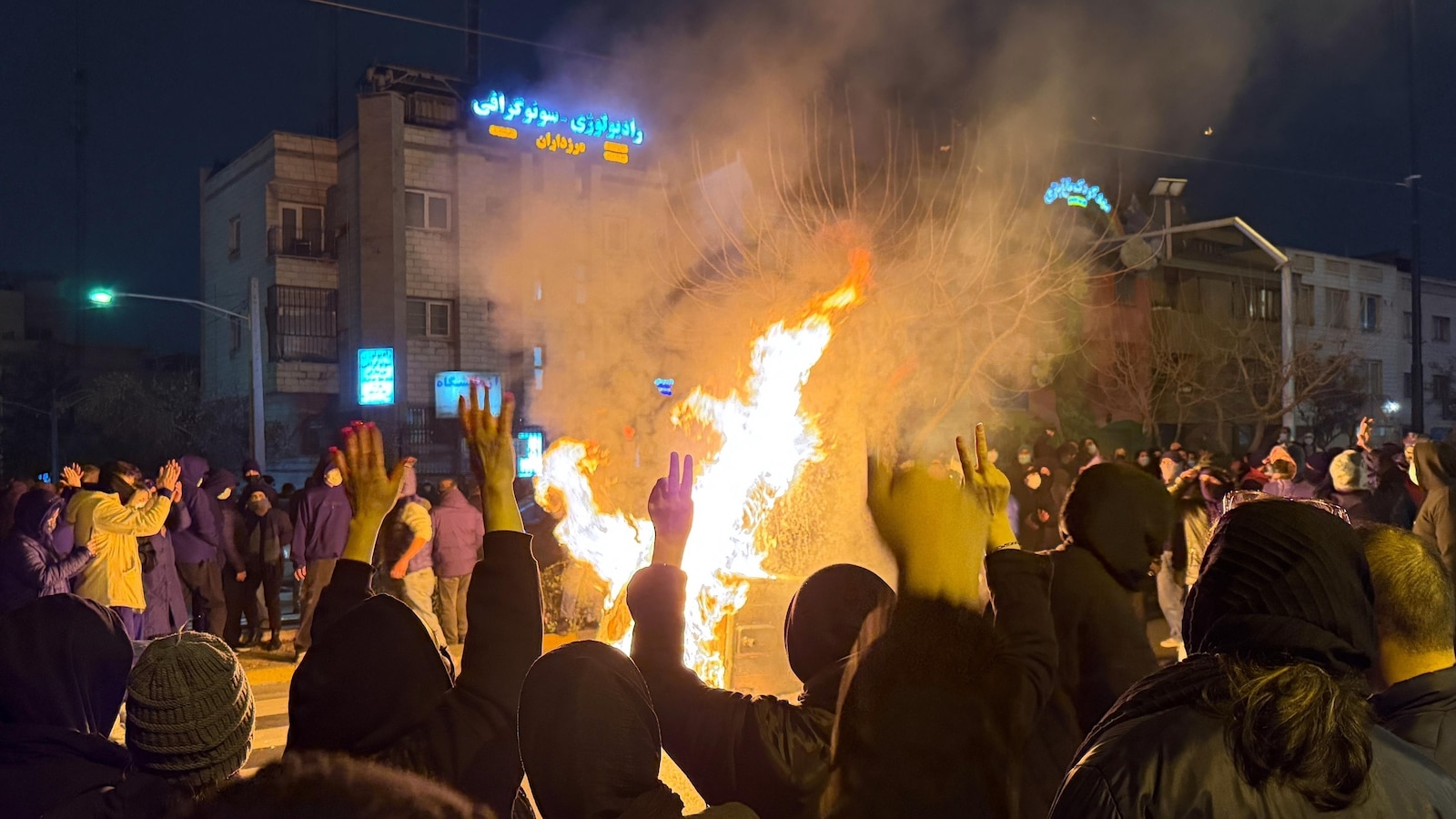
On a cold January evening in Karaj, a city west of Tehran, a 37-year-old beautician found herself running for her life. Tear gas canisters scattered protesters who had filled the wide boulevard just moments before, forcing her and her friends to seek shelter among the trees. The darkness was punctuated only by streetlights and the flickering glow of small fires. Then came the sound that would change everything—gunfire, sharp and unmistakable, captured on her phone’s video camera. “Don’t be afraid,” she screamed, her voice cracking with emotion and fear. The crowd around her, refusing to surrender to terror, joined her cry: “Don’t be afraid. We are all together.” When live bullets were confirmed, the chants shifted to “Shameless! Shameless!” and the familiar rallying cry of Iranian protesters: “Death to the dictator!” It was January 8, a night when hundreds of thousands of Iranians across the country challenged the clerical theocracy that has controlled their nation for nearly five decades. But this moment of collective courage would soon give way to something far darker—a crackdown so severe that it would send this beautician, like countless others, into hiding, paralyzed by fear and consumed by grief.
From Hope to Horror: The Aftermath of Protest
The days following that fateful night brought a transformation that the beautician could never have anticipated. She moved in with her mother, too afraid to be alone in her own home. Sleep became elusive, anxiety her constant companion. In a text message sent in late January, she described a nation transformed by trauma: “When you look at people in the street, it feels like you are seeing walking corpses, people with no hope left to continue living.” A blanket of fear had settled over Iran, she wrote, accompanied by a sense of grief and quiet rage that permeated everyday life. The videos and messages she sent to a relative in Los Angeles through sporadic openings in Iran’s internet blackout provide a raw, unfiltered account of the emotional journey—from the exuberance of taking to the streets to the shock and paralysis that followed the bloodiest crackdown the Islamic Republic has ever inflicted on its people. The beautician expressed deep despair about the possibility of change and a profound sense that the world had abandoned Iran. Even as Iran and the United States held nuclear talks, she saw little hope, fearing that Iran’s leaders would outlast international pressure and “become entrenched and all those people who died will have died in vain.”
The Unprecedented Scale of Repression
The numbers tell a story of violence on a scale previously unseen in the Islamic Republic’s history. Monitoring groups report that at least 6,854 people were killed during the protests, with most deaths occurring on January 8 and 9, though the actual number could be triple that figure. The government’s response went beyond lethal force—more than 50,000 people have been detained in the aftermath. A monthlong internet blackout was imposed, effectively hiding the full extent of what happened from both Iranians and the world. The Associated Press received over a dozen videos and numerous text messages that the beautician sent to her Los Angeles-based relative during brief windows when internet access was available. She gave permission for this material to be shared, though both she and her relative remain unnamed for security reasons. The AP verified the authenticity and location of her videos, confirming known features around Samandehi Park in Karaj. While not every detail could be independently verified, her account aligns broadly with testimonies from other protesters documented by journalists and human rights organizations, painting a picture of systematic violence against civilians.
A Life Squeezed by Economic Desperation
To understand why this beautician took to the streets despite the obvious dangers, one must understand the economic stranglehold that has made ordinary life in Iran increasingly impossible. Struggling in an economy crippled by decades of corruption, mismanagement, and international sanctions, she had chosen to work for herself as a nail technician, believing it offered better prospects than the scarce formal employment options. According to her relative, she had given up on having a family or children—everything was too expensive, and Iran had become too repressive a place to raise kids. Her loss of faith in Iranian politicians claiming to be moderates or reformers was complete. However, she had found hope in the power of popular movements, participating in the 2022 protests sparked by Mahsa Amini’s death in police custody after being arrested for not wearing her headscarf properly. But the violence that followed those protests—over 500 killed and more than 22,000 detained—left her disillusioned. Her mindset shifted, as her relative described it, “from saving her country to saving herself.” Her family searched for opportunities for her to leave Iran, but none materialized. When new protests erupted in late December over Iran’s plunging currency, she initially stayed home. But when she found herself unable to afford even cooking oil, it became the breaking point. In December, she had earned the equivalent of only $40, down from an already meager $300-$400 average over the previous year. On January 8, she made plans with friends to join the demonstrations, a decision that would haunt her in the weeks to come.
A Nation United in Defiance—Briefly
The night of January 8 witnessed something extraordinary in Iran’s recent history. Iranians poured into the streets of at least 192 cities across all 31 of the country’s provinces, according to the U.S.-based Human Rights Activists News Agency. These demonstrations were quite possibly the largest anti-government rallies since the 1979 Islamic Revolution that established the Islamic Republic. What made these protests particularly significant was the diversity of participants—cutting across social and economic classes to a degree not seen in previous demonstrations. The beautician’s videos capture this moment of unity and defiance. Protesters filled a main boulevard in Karaj, their confidence buoyed by their numbers as they walked unhurriedly among the trees. Women, men, and children chanted together: “Death to Khamenei,” referring to Supreme Leader Ali Khamenei, the ultimate authority in Iran’s government. Some chanted in support of Reza Pahlavi, the exiled crown prince and son of Iran’s last shah, who had called for public demonstrations. Protesters set up bonfires and formed circles around them. The exact sequence of events that led to violence isn’t clear from the videos, but one shows protesters lined up outside a police station, cheering as a fire burned inside. From within the station, police responded with tear gas and shotgun pellets, the beautician reported. Then came live ammunition.
The Lingering Trauma and Uncertain Future
The beautician’s messages describe witnessing approximately twenty people shot in her immediate vicinity that night. The parents of a family friend were killed as they tried to help a wounded person. Another friend lost her father, and authorities later demanded she pay the equivalent of $4,500 to release his body for burial. One of her videos shows a group huddled over a wounded protester, her leg soaked in blood, frantically searching for something to stop the bleeding. “Do you have a scarf? A headscarf, anything?” someone shouts. Another voice says, “We can’t go to the hospital,” apparently fearing arrest. Someone else interjects in panic: “Tie it tight and fasten it.” The government’s official death toll of more than 3,000 contrasts sharply with monitoring groups’ higher estimates, and Supreme Leader Khamenei has denounced the protests as “a coup.” According to rights groups, shooting continued in Karaj the following night, with snipers positioned on rooftops claiming more lives. The beautician ventured out briefly but quickly returned home, filming nothing. Since then, she has barely left her residence. “We have seen so many horrific scenes of people being killed before our eyes that we are now afraid to leave our homes,” she wrote. She fears security agents will come to her building and has agreed with neighbors not to let anyone in who rings the bells. She takes tranquilizers, she wrote, “but I don’t truly sleep.” Everyone she talks to reports similar insomnia, stressed that security forces might attack their homes at any moment. In late January, she briefly went out to withdraw money her relative had sent, only to find the bank had no cash available. Her final message captures the depth of the transformation: Over all the years of repression, “we always kept going, strong.” But not this time. “We are all in mourning, filled with anger that we no longer even dare to shout out, for fear of our lives. Because they have no mercy.” Her story is one among thousands, a testament to both the courage of ordinary Iranians and the brutal effectiveness of state violence in crushing dissent, leaving behind a population traumatized, isolated, and uncertain whether hope will ever return.