



The 2026 Milan Cortina Winter Olympics Begin with Historic Performances
Switzerland Claims First Gold in Men’s Downhill
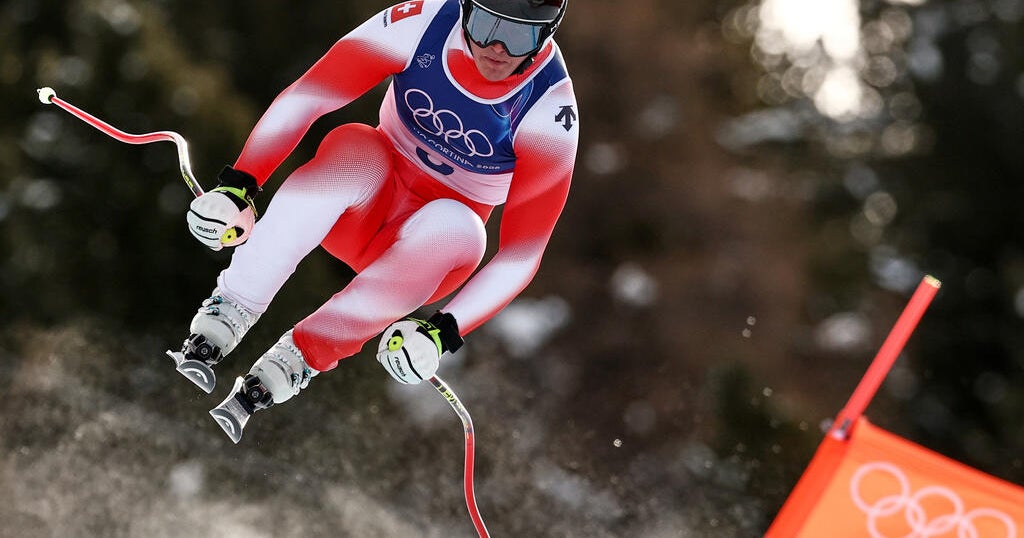
The 2026 Winter Olympics in Milan Cortina kicked off with thrilling competition as the first gold medal of the Games was awarded on Saturday during the men’s downhill race. Against the stunning backdrop of Bormio, Italy, Swiss skier Franjo von Allmen delivered a masterful performance on what turned out to be an absolutely perfect day for racing. Von Allmen navigated the demanding downhill course with remarkable precision and speed, crossing the finish line in an impressive time of 1 minute and 51.61 seconds. His run was a testament to both his technical skill and his ability to handle one of alpine skiing’s most challenging disciplines, where athletes reach breathtaking speeds while maneuvering through a course designed to test every aspect of their abilities.
The victory was particularly sweet for Switzerland, a nation with deep roots in alpine skiing excellence. Von Allmen’s flawless execution under the pressure of Olympic competition demonstrated why the Swiss have long been considered among the world’s elite in winter sports. The Bormio course, known for its technical difficulty and steep gradients, provided the perfect stage for the opening medal ceremony of these Games, and von Allmen rose to the occasion with a performance that will be remembered as one of the defining moments of the 2026 Olympics.
Italy Celebrates Double Podium Finish on Home Snow
While von Allmen claimed the top spot, the Italian crowd had plenty to cheer about as their home nation secured both silver and bronze medals in the men’s downhill. Giovanni Franzoni delivered an exceptional run that came heartbreakingly close to gold, finishing just two-tenths of a second behind von Allmen. In Olympic competition, where races are often decided by hundredths of a second, this narrow margin represented both an incredible achievement and a near-miss at the ultimate prize. Franzoni’s silver medal performance electrified the Italian supporters who had gathered to watch their athletes compete on home soil, creating an atmosphere of celebration despite falling just short of gold.
Adding to Italy’s joy, Dominik Paris, Franzoni’s teammate and a veteran of the downhill circuit, secured the bronze medal with his own impressive run. Paris’s performance was significant not only for earning Italy a second podium finish but also for bumping Marco Odermatt of Switzerland off the medal stand entirely. Odermatt, widely regarded as one of the most talented all-around skiers in the world, found himself on the outside looking in as Paris claimed the final spot on the podium. The Italian one-two punch of silver and bronze created an incredible atmosphere at the venue, with home fans celebrating what many considered a successful start to their nation’s Olympic hosting duties. For Team USA, Kyle Negomir represented the highest-ranking American finisher, crossing the line in tenth place—a respectable showing in one of the most competitive fields in Olympic skiing.
Sweden Dominates Women’s Skiathlon
The success continued for Scandinavian nations as Team Sweden delivered a commanding performance in the women’s skiathlon on Saturday. Competing at the Tesero Cross-Country Skiing Stadium in Val di Fiemme, Italy, Swedish athletes demonstrated their exceptional endurance and technical skill in this grueling 20-kilometer race. The skiathlon format, which combines classical and freestyle cross-country skiing techniques in a single race, is one of the most physically demanding events in the Winter Olympics, requiring athletes to maintain both speed and technique over a distance of just over 12 miles.
Frida Karlsson emerged as the star of the competition, delivering a dominant performance that saw her claim the gold medal with a time of 53 minutes and 45.2 seconds. Karlsson’s victory was a masterclass in pacing and endurance, as she managed to maintain her lead throughout the challenging course while her competitors pushed to catch her. Her performance was particularly impressive given the caliber of competition in the field, which included some of the world’s best cross-country skiers. The win represented a career-defining moment for Karlsson, who now joins the elite ranks of Olympic champions in one of winter sports’ most prestigious events.
Swedish Depth Shines as Andersson Claims Silver
Sweden’s strength in cross-country skiing was further emphasized when Ebba Andersson, Karlsson’s teammate, secured the silver medal. Andersson, who comes into these Games as the two-time reigning world champion, finished 51 seconds behind her compatriot, giving Sweden a one-two finish that highlighted the nation’s depth in the sport. This kind of dominance is rarely seen in Olympic competition, where the margin between victory and defeat is usually razor-thin. The Swedish team’s preparation and training clearly paid dividends, as they were able to place two athletes on the podium in one of the Games’ most competitive events.
Norway’s Heidi Weng rounded out the podium by claiming the bronze medal, continuing the Scandinavian dominance of the event. The results continued a remarkable trend in Olympic history—either a Swedish or Norwegian woman has now won the skiathlon gold medal in each of the last five Winter Olympics. This sustained excellence speaks to the cultural importance of cross-country skiing in these nations and the robust development programs that continue to produce world-class athletes generation after generation. The Scandinavian countries’ commitment to winter sports, combined with ideal training conditions and a deep tradition of excellence, has created a dynasty in cross-country skiing that shows no signs of slowing down.
American Hopes Fall Short in Skiathlon
For Team USA, the women’s skiathlon provided a lesson in the challenging nature of Olympic competition. Jessie Diggins, America’s top hope in the event and one of the nation’s most successful cross-country skiers in history, finished in eighth place, more than three minutes behind gold medalist Karlsson. While eighth place at the Olympics represents a solid performance and demonstrates Diggins’ continued presence among the world’s elite, it also highlighted the significant gap that exists between American cross-country skiing and the traditional powerhouses of Scandinavia.
Diggins’ result, while disappointing for those hoping for a medal, should be viewed in context. Cross-country skiing has never been a traditional strength for the United States in the way it has for countries like Norway and Sweden, where the sport is deeply embedded in the national culture. The fact that an American athlete can compete at this level and finish in the top ten represents progress for the sport in the United States. As the 2026 Winter Olympics continue in Milan Cortina, these early competitions have set the tone for what promises to be an exciting Games, with traditional winter sports powers like Switzerland, Italy, and Sweden making their mark early, while nations like the United States continue working to close the gap in sports where they’ve historically been less competitive. The coming days will reveal whether these early results represent the beginning of broader trends or simply the opening chapter in what is sure to be a memorable Olympic competition.