


How the Iran Conflict Could Push America Toward Economic Recession
Rising Energy Costs Threaten Economic Stability
The escalating conflict with Iran has sent ripples of concern through America’s financial circles, with leading economists and Wall Street analysts warning that the nation faces an increased risk of sliding into recession within the coming year. The crisis has already disrupted global energy markets, particularly affecting oil flows through the strategically vital Strait of Hormuz, where approximately one-fifth of the world’s crude oil and natural gas typically passes. This critical waterway has become nearly impassable for oil tankers due to the ongoing hostilities, creating a supply shock that’s reverberating across the global economy. Goldman Sachs has responded to these developments by raising its recession probability forecast to 30% over the next twelve months, while the consulting firm EY-Parthenon has taken an even more cautious stance, estimating a 40% chance of severe economic downturn compared to 35% before military operations began on February 28th. The investment community’s growing anxiety reflects not just immediate price pressures, but deeper concerns about how prolonged uncertainty and supply disruptions could fundamentally alter the economic trajectory that many Americans had hoped would continue post-pandemic recovery.
Inflation Pressures Mount Across Multiple Sectors
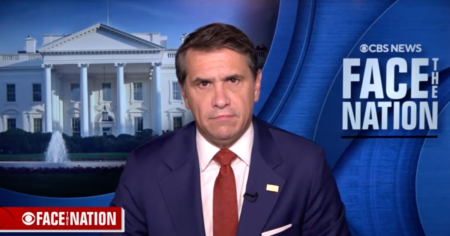
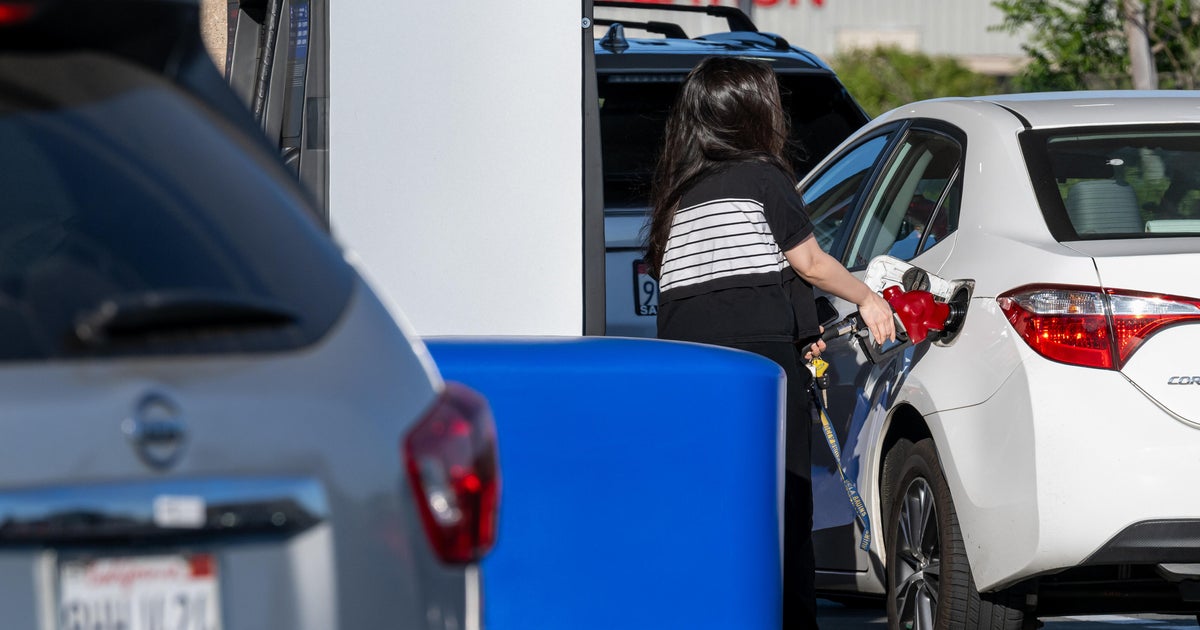
The most visible impact of the Iran conflict for everyday Americans has been at the gas pump, where prices have climbed dramatically in just a matter of weeks. According to AAA, the national average for regular gasoline reached $3.98 per gallon, representing a full dollar increase from just one month earlier. Even more concerning for the broader economy, diesel fuel—the lifeblood of America’s transportation, construction, and agricultural industries—has skyrocketed to $5.37 per gallon from $3.75 in the same period. Goldman Sachs economists project that these energy disruptions will push overall U.S. inflation to 3.1% by year’s end, an increase of 0.2 percentage points that may seem modest but could significantly erode household purchasing power. Gregory Daco, chief economist at EY-Parthenon, explained to CBS News that American families are being hit particularly hard because they’re still recovering from the inflationary surge and economic upheaval caused by the pandemic. The combination of tighter financial conditions, increased uncertainty, and rising prices creates a perfect storm that threatens to undermine consumer spending—the engine that drives roughly two-thirds of all U.S. economic activity. For many households already stretched thin by years of economic volatility, these additional cost pressures could force difficult choices between essential expenses.
Beyond the Pump: Cascading Price Increases
The economic impact of the Iran conflict extends far beyond what consumers see when filling their tanks. Goldman Sachs analysts have identified significant disruptions to fertilizer supplies originating from the Middle East region, with key agricultural inputs like urea and ammonia experiencing notable price increases since hostilities began. This development is expected to drive U.S. food prices up by approximately 1.5% throughout the year, as farmers face higher input costs that inevitably get passed along to grocery shoppers. The transportation sector has likewise felt immediate effects, with airlines announcing surcharges and ticket price increases to compensate for soaring jet fuel costs. In a move that will touch virtually every American household, the U.S. Postal Service announced a temporary 8% postage surcharge to offset growing transportation expenses. Daco emphasized that this higher inflation will curtail economic activity across the board, resulting in less growth than previously anticipated. PNC Financial Services Group chief economist Gus Faucher painted an even more sobering picture, suggesting that if oil prices climb to $150 per barrel, the probability of recession would exceed 50%. His reasoning is straightforward: when companies and consumers must allocate more of their budgets to energy costs, they have correspondingly less money available to spend on other goods and services, creating a drag effect that slows the entire economy.
The Uncertainty Factor and Consumer Behavior
Perhaps the most insidious economic threat posed by the Iran conflict isn’t the immediate price increases, but rather the climate of uncertainty that could fundamentally alter consumer and business behavior. Faucher explained that consumers facing an unclear economic future may postpone major purchases—whether that’s a new car, home appliances, or other significant investments. This cautious approach becomes particularly problematic because recent economic growth has been substantially supported by spending from higher-income households, who have more discretionary income and flexibility in their purchasing decisions. If this affluent segment of consumers decides to pull back on spending due to geopolitical concerns or market volatility, the ripple effects could be sufficient to tip the economy into recession. Businesses face similar decision-making dilemmas when it comes to capital investments and expansion plans. As Faucher noted, there’s an enormous difference between operating in an environment where oil costs $60 per barrel versus $120 per barrel, and many companies may rationally choose to delay investment decisions until the outlook becomes clearer. This wait-and-see approach, while prudent from an individual business perspective, can collectively create a self-fulfilling prophecy where economic activity slows simply because everyone is being cautious simultaneously. The financial markets themselves amplify these concerns, as investor uncertainty can trigger volatility that further undermines confidence and economic stability.
Why America Might Weather the Storm
Despite these genuine concerns and elevated recession probabilities, many economic experts emphasize that the United States enters this period of uncertainty from a position of relative strength and has several protective factors working in its favor. Most importantly, America has transformed from being heavily dependent on Middle Eastern oil to becoming the world’s largest oil producer, which provides substantial insulation from supply shocks in that region. Gregory Daco pointed out that most crude oil from the Middle East is actually destined for Asian and European markets rather than American refineries, meaning the direct supply impact on the U.S. is somewhat buffered compared to other parts of the world. Additionally, American consumers today dedicate a smaller portion of their household budgets to energy goods and services than in previous decades, according to the American Petroleum Institute, making them somewhat less vulnerable to energy price spikes. Technological improvements have also provided a cushion, with modern automobiles being significantly more fuel-efficient than their predecessors, meaning motorists don’t need to fill up as frequently even when prices rise. Some analysts, including ClearBridge Investments’ Josh Jamner, believe that larger tax refunds resulting from provisions in Republicans’ recently passed “One Big Beautiful Bill Act” will help offset higher prices at the pump for many families.
Fundamental Economic Strengths Remain Intact
Looking at the broader economic picture, Apollo Global Management’s chief economist Torsten Slok maintains a notably optimistic outlook, estimating only a 10% probability of recession in the United States. Slok emphasizes that before the Iran conflict erupted, the American economy was experiencing strong tailwinds from substantial investments in artificial intelligence data centers and increased spending on domestic manufacturing initiatives. His analysis suggests the impact will be relatively contained: inflation rising by just 0.1%, GDP dipping by only 0.1%, and unemployment increasing by 0.1%. The U.S. economy has demonstrated remarkable resilience in recent years, successfully navigating various economic shockwaves including the Trump administration’s tariffs on dozens of trading partners. This track record of weathering disruptions provides some confidence that American businesses and consumers can adapt to the current challenges. The key question remains whether the Iran conflict will be resolved relatively quickly or evolve into a prolonged crisis that steadily erodes economic confidence and activity. For now, oil prices remain well below the most alarming scenarios, with Brent crude at around $102 per barrel and U.S. benchmark crude at approximately $94 per barrel—representing roughly 40% increases since late February but still far from the $150 threshold that would signal more serious economic trouble. The coming months will reveal whether America’s economic fundamentals and structural advantages prove sufficient to navigate this geopolitical storm, or whether the combination of energy disruptions, inflation pressures, and uncertainty ultimately proves too much for the recovery to withstand.