


Wall Street’s Turbulent Week: Understanding the Market’s Fifth Consecutive Decline
A Market Under Pressure
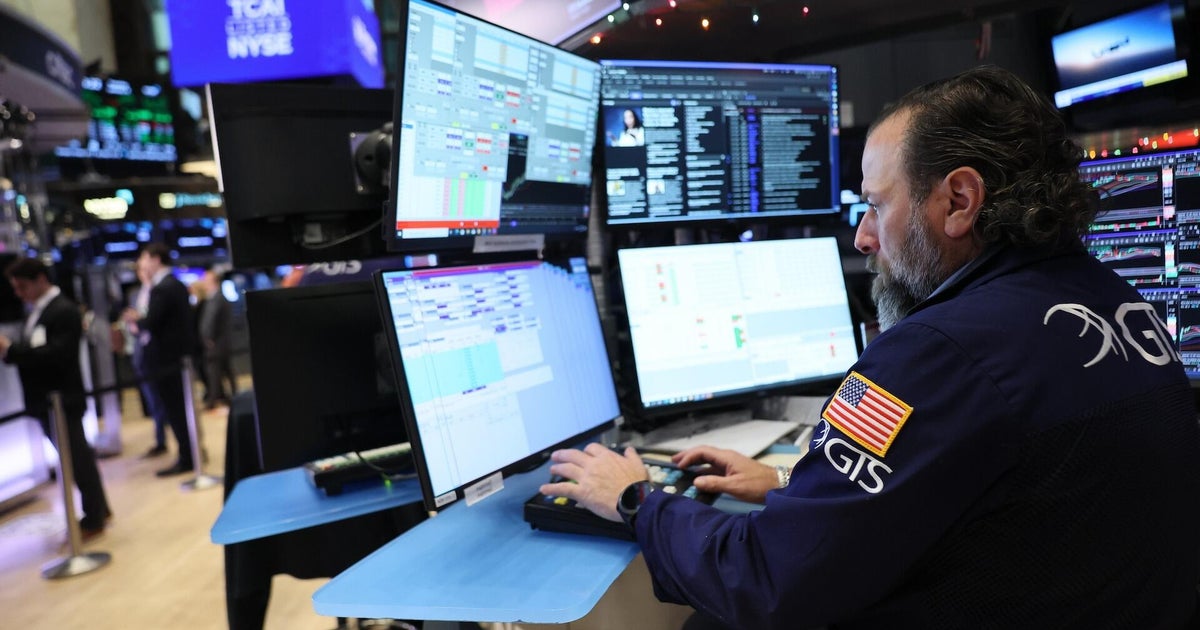
The American stock market closed out another difficult week on Friday, marking what has become the longest losing streak in nearly four years. As investors watched their portfolios shrink for the fifth consecutive week, the anxiety on Wall Street was palpable. The day’s trading session saw significant losses across all major indices, with the benchmark S&P 500 dropping 55 points to settle at 6,422, representing a decline of 0.85%. The Dow Jones Industrial Average wasn’t spared either, shedding 371 points to close at 45,589, while technology stocks bore even heavier losses, with the Nasdaq falling 1.3%. What makes these numbers particularly sobering is the broader context: the S&P 500 has now retreated to levels not seen since last August and sits a full 8% below the record high it achieved earlier in the year. This decline came on the heels of Thursday’s trading session, which marked the worst single-day drop since the Iran conflict erupted on February 28, adding to the mounting concerns that are keeping investors up at night.
The Iran Factor: Oil Prices and Geopolitical Uncertainty
At the heart of this market turbulence lies a geopolitical crisis that has sent shockwaves through global energy markets. The ongoing conflict involving Iran has created a perfect storm of uncertainty, with crude oil prices surging and creating ripple effects throughout the economy. Investors find themselves whipsawed by conflicting messages from world leaders, adding confusion to an already tense situation. President Trump recently announced an extension to his deadline for Iran to reopen the strategically vital Strait of Hormuz, citing progress in negotiations that he characterized as “going very well.” However, Iranian officials have directly contradicted these claims, denying any direct talks are taking place while maintaining their blockade of this crucial waterway in the Persian Gulf, through which a significant portion of the world’s oil supply normally flows. Nigel Green from the investment firm deVere Group aptly captured the market’s reactive pattern in his recent commentary: “Each time the conflict intensifies, oil spikes, stocks fall, and yields rise. Each time there is even a hint of restraint, those moves reverse. The pattern now seems firmly established.” This back-and-forth has created an exhausting cycle for investors, who struggle to maintain stable positions when the ground beneath them keeps shifting.
Consumer Confidence Takes a Hit
Adding fuel to the fire, American consumers are showing clear signs of worry about the economic situation. The University of Michigan released its preliminary consumer sentiment index for March on Friday, revealing troubling trends that extend beyond the usual economic concerns. The reading came in as the lowest since December 2025, but what’s particularly noteworthy is where this anxiety is concentrated. Unlike previous economic downturns where lower-income households typically bore the brunt of worry, this time the decline in confidence is most pronounced among middle- and high-income consumers—groups that usually maintain optimism even during uncertain times. Elizabeth Renter, a senior economist at NerdWallet, provided valuable insight into this shift: “When we go to war, people anticipate worsening economic constraints, including higher prices. But they also anticipate volatility in their investments. That’s why this time the dip in consumer sentiment is being felt across higher incomes and those with stocks.” This explanation highlights how the current crisis is unique in its reach, affecting not just those who worry about filling their gas tanks or paying heating bills, but also those who have investments in the stock market and retirement accounts that are watching their wealth erode week after week.
The Energy Crisis Looming Large
The fear gripping financial markets extends far beyond simple stock price movements—it encompasses genuine concern about a potential long-term disruption to oil and natural gas production and transportation from the Persian Gulf region. Financial analysts and economists worry that if significant volumes of oil and gas remain locked out of global markets for an extended period, it could trigger a devastating wave of inflation that would sweep across the entire world economy. The consequences wouldn’t be limited to drivers paying more at the pump, though that alone would strain household budgets. The real economic danger lies in how elevated energy costs cascade through the entire supply chain. Companies that rely on trucks to move goods, shipping firms transporting products across oceans, and airlines flying cargo and passengers would all face dramatically higher operating costs, and history shows these businesses inevitably pass those costs along to consumers through higher prices for virtually everything. The numbers tell a sobering story: Brent crude oil prices climbed 2.2% on Friday alone to reach $104.13 per barrel, a dramatic increase from the roughly $70 per barrel prices that prevailed before the conflict began. Benchmark U.S. crude followed a similar trajectory, rising 3% to $97.28 per barrel. Perhaps most alarming are the projections from strategists at Macquarie, who estimate that if the war continues through the end of June, oil prices could skyrocket to an unprecedented $200 per barrel—well above the record high of just over $147 per barrel set during the summer of 2008, when a combination of Iran’s missile testing capabilities and strong Chinese demand pushed prices to what were then unimaginable levels despite the Great Recession.
Bond Market Reactions and Rising Borrowing Costs
The turbulence hasn’t been confined to the stock market; the bond market has experienced its own significant shifts that carry important implications for everyday Americans. Long-term Treasury yields continued their upward climb on Friday, moving in tandem with rising oil prices. The yield on the benchmark 10-year Treasury note reached 4.44%, up from 4.42% just the day before, and representing a substantial jump from the 3.97% level that prevailed before the war began. While these percentage point differences might seem small on paper, their real-world impact is anything but minor. Rising Treasury yields serve as the foundation for interest rates throughout the economy, meaning that when they go up, borrowing becomes more expensive for everyone. Americans looking to buy homes have already seen mortgage rates jump significantly, pricing many potential buyers out of the market or forcing them to accept smaller homes than they’d hoped for. Businesses seeking loans to expand operations, purchase equipment, or manage cash flow face similar challenges with higher borrowing costs. This tightening of credit conditions acts as a brake on economic activity, slowing growth at a time when the economy is already facing headwinds from other directions. The stock market reflected these concerns, with more than two-thirds of companies in the S&P 500 seeing their share prices decline on Friday.
Looking Ahead: Uncertainty Remains the Only Certainty
As markets closed on Friday and investors headed into the weekend, the prevailing mood was one of caution and uncertainty about what lies ahead. The few bright spots in an otherwise gloomy trading session were rare, with Netflix managing to gain 0.3% following its announcement of price increases for its streaming services—a move that might ordinarily have caused concern among investors worried about subscriber retention, but in the current environment was apparently seen as a sign of pricing power. The fundamental question facing investors, policymakers, and ordinary Americans alike is how long the current situation will persist and how much worse it might get before it gets better. The conflicting signals from world leaders about the state of negotiations make it nearly impossible to predict when or how the Iran crisis might be resolved. Meanwhile, the economic impacts are already being felt: higher prices at gas stations, increased anxiety about investment portfolios and retirement savings, rising borrowing costs for major purchases, and an overall sense of unease about what the coming months might bring. For financial markets, the pattern of reaction to every development in the conflict—both positive and negative—suggests that volatility will remain elevated for the foreseeable future. Investors who might normally buy stocks during dips are hesitating, uncertain whether current prices represent genuine bargains or if further declines lie ahead. As Wall Street enters what promises to be another tense week of trading, the only thing that seems certain is continued uncertainty, with oil prices, geopolitical developments, and economic data all capable of moving markets dramatically in either direction on any given day.