


NATO Allies Navigate Uncertain Waters as U.S. Engagement Appears to Shift
Missing in Action: A New Pattern Emerges at NATO Headquarters
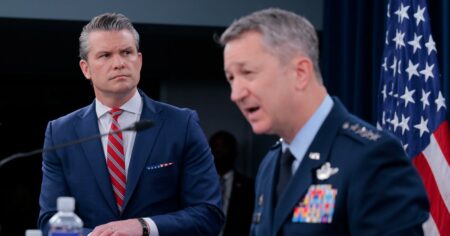
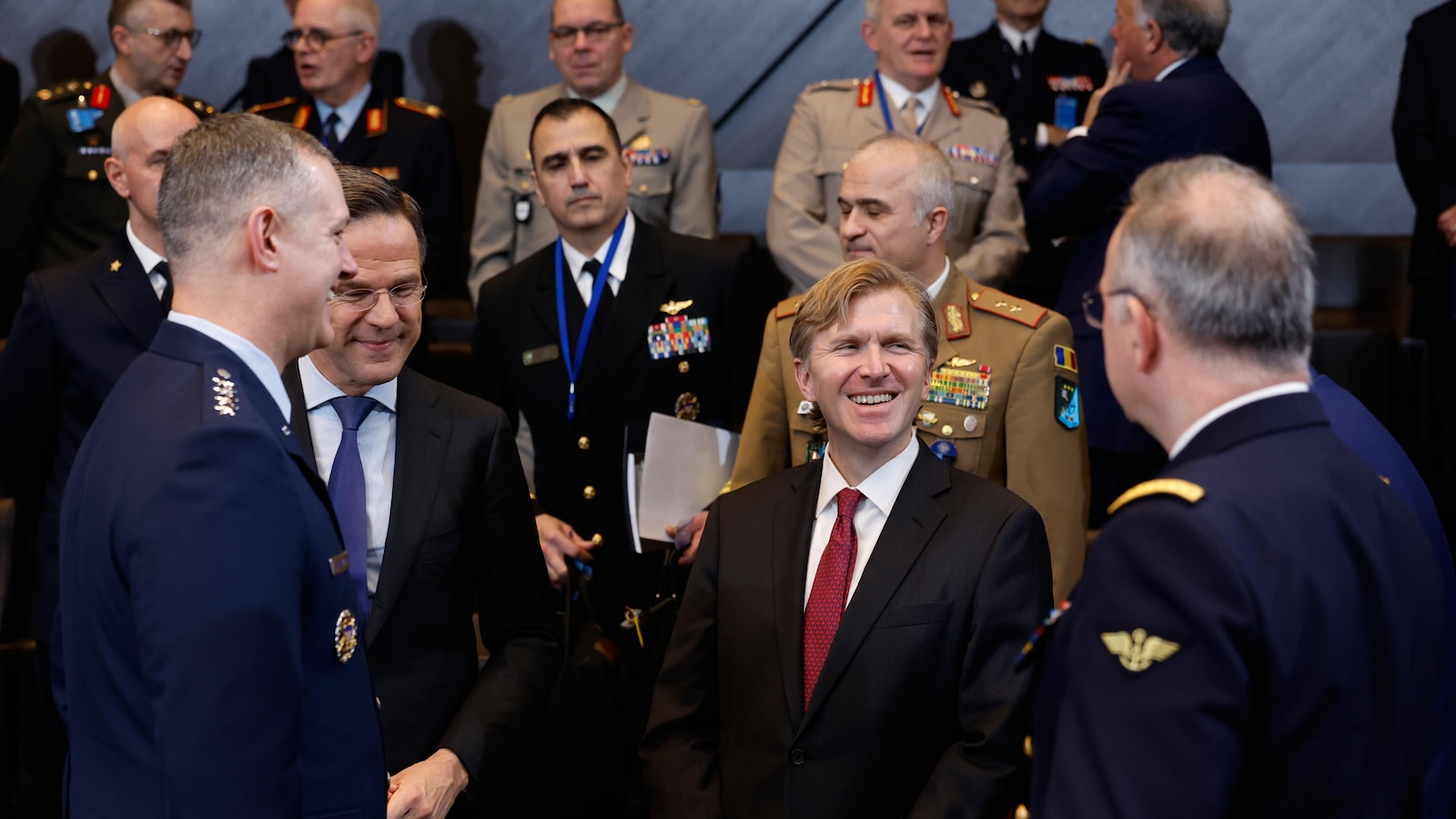
In what would have been considered unusual just a few years ago, the United States has now missed two consecutive high-level NATO meetings, raising eyebrows across the Atlantic alliance. U.S. Defense Secretary Pete Hegseth was notably absent from Thursday’s critical gathering of defense ministers in Brussels, following Secretary of State Marco Rubio’s decision to skip the previous foreign ministers’ meeting in December. Instead, Under Secretary of Defense Elbridge Colby represented American interests at the table. While such absences from the North Atlantic Council—NATO’s top decision-making body—would traditionally signal a shift in priorities, European allies are publicly maintaining a united front, downplaying any suggestion of American disengagement. Icelandic Foreign Minister Þorgerður Katrín Gunnarsdóttir offered a diplomatic response, noting that while Hegseth was “missing a good party,” she wouldn’t characterize his absence as a troubling sign. German Defense Minister Boris Pistorius echoed this sentiment, emphasizing that everyone has busy schedules and suggesting this was simply a practical decision rather than a political statement. However, beneath these reassuring words, there’s an undercurrent of uncertainty about America’s evolving role in European security.
Europe Steps Up: From Dependency to Defense Independence
The changing dynamics at NATO reflect a broader transformation that’s been underway since Russia’s invasion of Ukraine four years ago. Lord Hastings Ismay, NATO’s first secretary-general, famously described the alliance’s purpose in 1949 as keeping “the Americans in, the Russians out, and the Germans down.” Today’s reality looks dramatically different. Germany, once constrained by its post-World War II posture, has pledged an impressive 100 billion euros (approximately $118 billion) to modernize its military capabilities in the coming years, signaling a fundamental shift in European defense thinking. NATO Secretary-General Mark Rutte has taken a pragmatic approach to managing these transitions, acknowledging that the United States must balance global responsibilities that extend far beyond Europe. He emphasized that American administrations have consistently urged European nations and Canada to shoulder more of the defense burden for NATO territory, while the U.S. maintains its commitment to the nuclear deterrent that underpins the alliance’s security architecture. This new division of labor reflects both necessity and opportunity—necessity because American attention is increasingly divided among global challenges, and opportunity because it allows Europe to assert greater strategic autonomy and responsibility for its own neighborhood.
Uncertainty and the “No-Surprise” Promise
Despite the public displays of solidarity and understanding, significant concerns persist among NATO members about the Trump administration’s intentions. The specter of additional U.S. troop withdrawals from Europe hangs over the alliance, reminiscent of previous tensions during Trump’s first presidency. Dutch Defense Minister Ruben Brekelmans highlighted what he considers the most crucial element in the current relationship: the “no-surprise policy” that has been agreed upon between the NATO secretary-general and the United States. This arrangement represents an attempt to maintain predictability and trust even as the traditional patterns of American engagement evolve. The Trump administration’s approach marks a clear departure from the Biden years. Just a year ago, Hegseth made clear that American security priorities were shifting away from Europe, suggesting that European nations would need to take primary responsibility for both continental defense and support for Ukraine in its ongoing struggle against Russian aggression. The practical implications of this shift are already visible—the substantial flow of American weapons and financial assistance to Ukraine that characterized the Biden administration has largely stopped under Trump. European allies and Canada now find themselves obliged to purchase weapons from the United States with their own funds before donating them to Ukraine, a significant change in the support mechanism.
Ukraine Support: Europe Takes the Lead
The changing American posture was perhaps most evident in Thursday’s meeting of the Ukraine Defense Contact Group, a coordination mechanism for Western military support to Ukraine. Once a flagship initiative proudly championed by the Pentagon under President Biden, this group is now co-chaired by the United Kingdom and Germany—a symbolic passing of the torch that speaks volumes about the shifting burden of Ukrainian support. The United Kingdom announced a substantial new contribution: an additional half a billion pounds (approximately $682 million) dedicated to urgent air defense systems for Ukraine. U.K. Defense Secretary John Healey framed this commitment as “Britain being a force for good in the world, building a new deal for European security within NATO.” Sweden also stepped forward with plans to fund additional purchases of American weaponry for Ukraine, while the Netherlands committed to providing more flight simulators to support the training of Ukrainian pilots learning to operate F-16 fighter jets. These announcements demonstrate that European nations are not merely talking about taking greater responsibility—they’re backing their words with substantial financial commitments and concrete military assistance. This evolution represents both a challenge and an opportunity for European nations, forcing them to develop more robust defense industries and logistics while potentially reducing their long-term dependence on American military largesse.
Arctic Sentry: Addressing Trump’s Greenland Fixation
The one major announcement emerging from Thursday’s NATO meeting was the launch of Arctic Sentry, a new initiative ostensibly designed to counter Russian and Chinese activities in the Arctic region. However, the timing and structure of this program reveal its true primary purpose: addressing U.S. security concerns in the high north and, more specifically, attempting to defuse President Trump’s controversial statements about potentially seizing Greenland. In reality, Arctic Sentry represents more of a rebranding exercise than a fundamental new military commitment. Existing national exercises already conducted by countries like Denmark and Norway will now be brought under the NATO umbrella and coordinated by the organization’s military leadership, but this is not a long-term NATO operation or mission in the traditional sense. Denmark, France, and Germany have committed to participating in the “military activities” under Arctic Sentry, though the specific nature of their contributions remains undefined. Finland and Sweden, both recent NATO members with significant Arctic interests, are likely to become involved, while Belgium is still considering what role it might play. Tellingly, it remains unclear what role, if any, the United States itself will take in Arctic Sentry. U.S. Ambassador to NATO Matthew Whitaker emphasized before the meeting that America cannot be expected to contribute more, stating that “we need capable allies that are ready and strong, that can bring assets to all of these areas of our collective security.”
Moving Beyond the Greenland Crisis
President Trump’s renewed threats in recent months to annex Greenland—a semiautonomous territory belonging to NATO ally Denmark—have created what Belgian Defense Minister Theo Francken called “not the best moment of NATO (over) the last 76 years.” The situation exposed a fundamental tension at the heart of the alliance: NATO’s primary purpose is to defend the territory of its member states, not to have those territories threatened by other members. The Greenland dispute has deeply shaken the alliance because it challenged basic assumptions about solidarity and mutual respect that have underpinned NATO since its founding. European allies and Canada are hoping that Arctic Sentry, combined with ongoing diplomatic discussions between the Trump administration, Denmark, and Greenland, will allow the alliance to move past this uncomfortable episode and refocus attention on what they view as Europe’s genuine security priority: Russia’s ongoing war against Ukraine. Francken expressed relief that the Arctic security arrangement might mean “we stop having some food fights over the Atlantic,” describing the Greenland saga as “a crisis that was not needed.” His candid assessment reflects a broader European desire to preserve alliance unity while acknowledging the unprecedented challenges posed by unpredictable American policy shifts. As NATO navigates these uncertain waters, the alliance faces a fundamental test of its adaptability and resilience in an era when the traditional American leadership role can no longer be taken for granted.